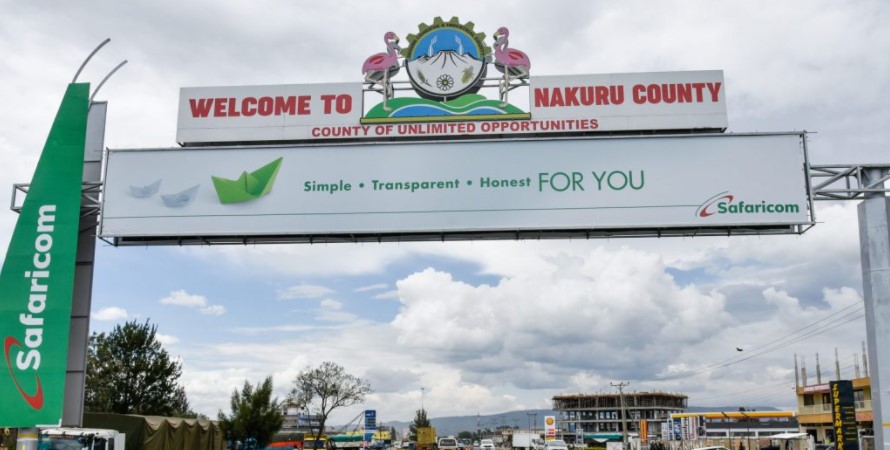
- In recent decades, Nakuru’s evolution has been marked by major milestones. It became the headquarters of Nakuru County following the 2010 Constitution and, in 2021, was officially granted city status. Today, Nakuru stands as one of Kenya’s fastest-growing cities, known for its agricultural productivity, tourism centered on Lake Nakuru National Park, and expanding residential and commercial developments.
Nakuru’s story begins in dust. Long before railway tracks cut through the Rift Valley and colonial buildings rose near the plains, the area was known to the Maasai as Naaguro, a word meaning “dust or dusty place”.
The name captured the character of the land around Lake Nakuru dry, open, and shaped by the rhythms of pastoral life. The Maasai were the earliest inhabitants of the area, grazing their livestock across the plains before colonial settlement altered both land ownership and livelihoods. Today, the name Nakuru remains a living reminder of this indigenous heritage and the landscape that gave birth to the town.
The transformation of Nakuru from a quiet plain into a settlement of strategic importance began at the turn of the twentieth century with the construction of the Nairobi–Uganda Railway between 1895 and 1901. In 1900, a railway station was established in Nakuru, instantly placing the area on the colonial map.
The station became a gateway to the surrounding regions of Subukia, and Njoro, attracting settlers, traders and administrators. What had once been a seasonal grazing ground rapidly evolved into a growing service centre anchored by the railway.
By 1904, Nakuru’s importance had become evident, and it was awarded township status. This designation spurred more organized development as roads, administrative offices and commercial enterprises began to take shape.
Read More
Among the earliest and most notable establishments was the Nakuru Hotel, built in 1906. Other earliest colonial establishments was the Nakuru Hotel (later Midlands Hotel), which became a hub for settlers and officials.
Health services soon followed the urban growth. The War Memorial Hospital was constructed next to the railway station to serve British soldiers and settlers from Nakuru and neighboring areas such as Gilgil, Njoro, Subukia and Naivasha. Its presence further reinforced Nakuru’s role as a regional hub, providing essential services to a rapidly expanding settler population and surrounding communities.
As agriculture flourished, particularly wheat and dairy farming, Nakuru continued to expand in size and influence. After Kenya gained independence in 1963, the town experienced accelerated growth as people from different parts of the country settled there, transforming it into a multicultural urban centre. Its strategic location along major transport routes strengthened its role in trade, education and administration.
In recent decades, Nakuru’s evolution has been marked by major milestones. It became the headquarters of Nakuru County following the 2010 Constitution and, in 2021, was officially granted city status.
Today, Nakuru stands as one of Kenya’s fastest-growing cities, known for its agricultural productivity, tourism centered on Lake Nakuru National Park, and expanding residential and commercial developments.
Looking to the future, Nakuru is poised for even greater transformation. With continued investment in infrastructure, industry and urban planning, the city is expected to play an increasingly important role in Kenya’s economic landscape.
Yet, as it grows, Nakuru faces the challenge of balancing development with environmental conservation and sustainable urban management. From the dusty plains of Naaguro to a modern city on the rise, Nakuru’s journey reflects both its rich past and its promise for the generations to come.
As the city continues to expand, the real question for its people is this: how can Nakuru honor its indigenous roots while shaping a sustainable future that serves generations to come? Share your thoughts in the comments section below.
Stay connected with us on WhatsApp and TikTok for instant updates and breaking news as it happens.