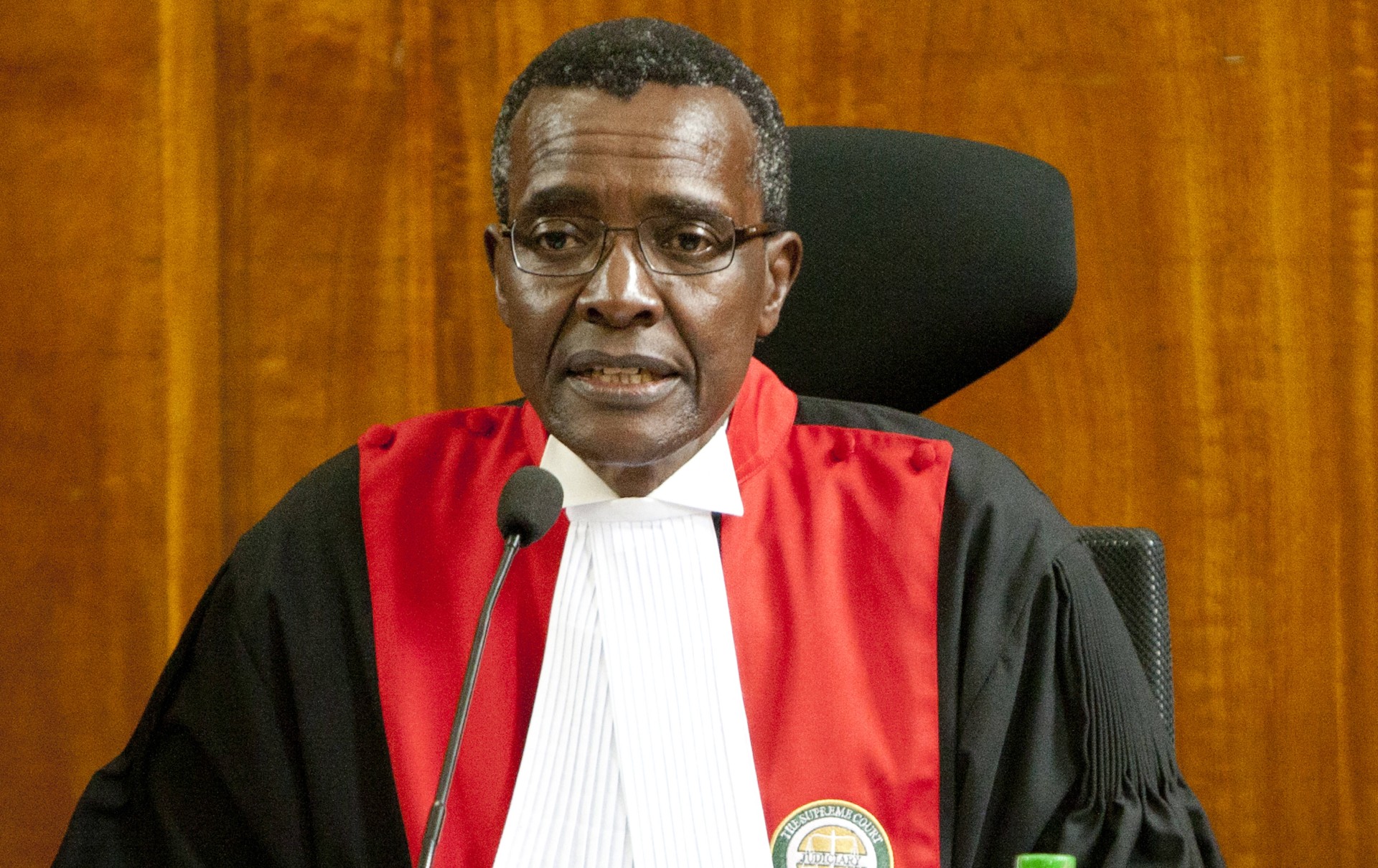
- Maraga’s July 2025 launch of a public fundraising website marked a deliberate break from Kenya’s opaque campaign traditions.
United Green Movement (UGM) presidential contender David Maraga has turned campaign financing into a civic experiment.
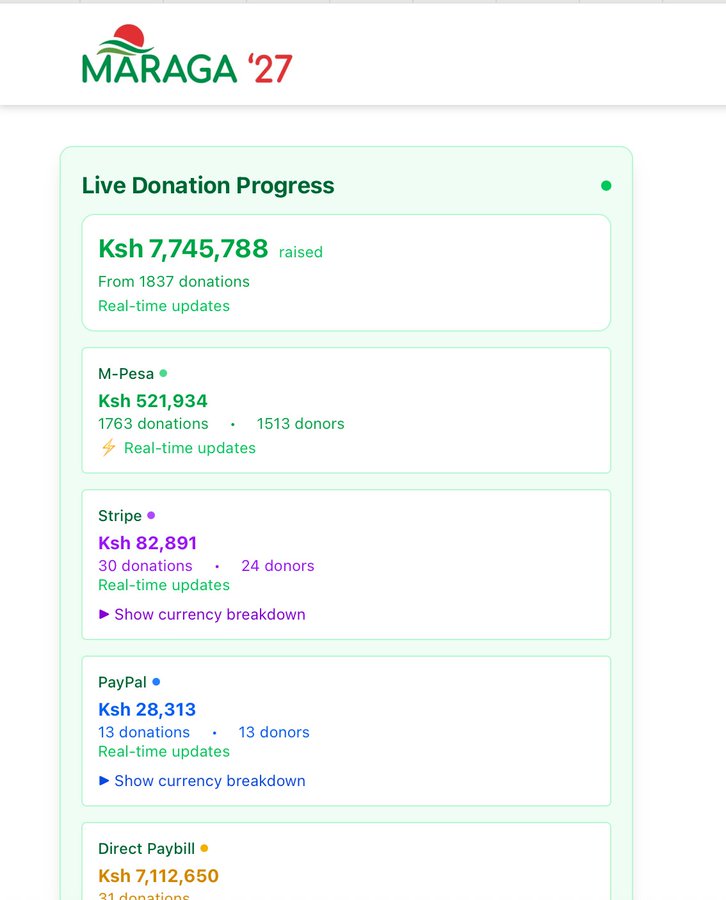
Recently, he thanked the 1,834 Kenyans who have already contributed to his bid, announcing that donations now stand at KES 7,745,788.04, with more than KES 6 million flowing in from the diaspora.
“I am deeply grateful to the 1,834 of you who have made a financial contribution to our campaign… I am particularly thankful to the Kenyans in the Diaspora who have made a significant contribution of more than 6 Million Shillings, which has boosted our efforts immensely,” Maraga said.
Read More
With these funds, Maraga is rolling out the #UkatibaCaravan, a nationwide civic education drive aimed at mobilizing young voters under the banner #GenZ15MillionStrong. His message is clear: campaign resources should not be the preserve of elites but the collective investment of citizens.
Maraga’s July 2025 launch of a public fundraising website marked a deliberate break from Kenya’s opaque campaign traditions.
Citizen-Funded Model: Ordinary Kenyans, not political financiers, form the backbone of his campaign.
Transparency: Every shilling is accounted for in public view, a sharp contrast to the shadowy flows that typically fuel presidential bids.
Volunteer Integration: Donations are tied to a broader call for service—supporters can contribute money, time, or expertise.
Maraga insists this model is about ownership, giving citizens a stake in the leadership they demand.
Yet, as political analyst Dr. Michael Ndonye reminds us, the terrain is unforgiving.
In the Political Chessboard column article published on January 16, 2026 on the Standard Newspaper, he has broken down the hidden costs of campaigns—logistics, mobilization, media, security, and patronage networks—that demand continuous cash flow.
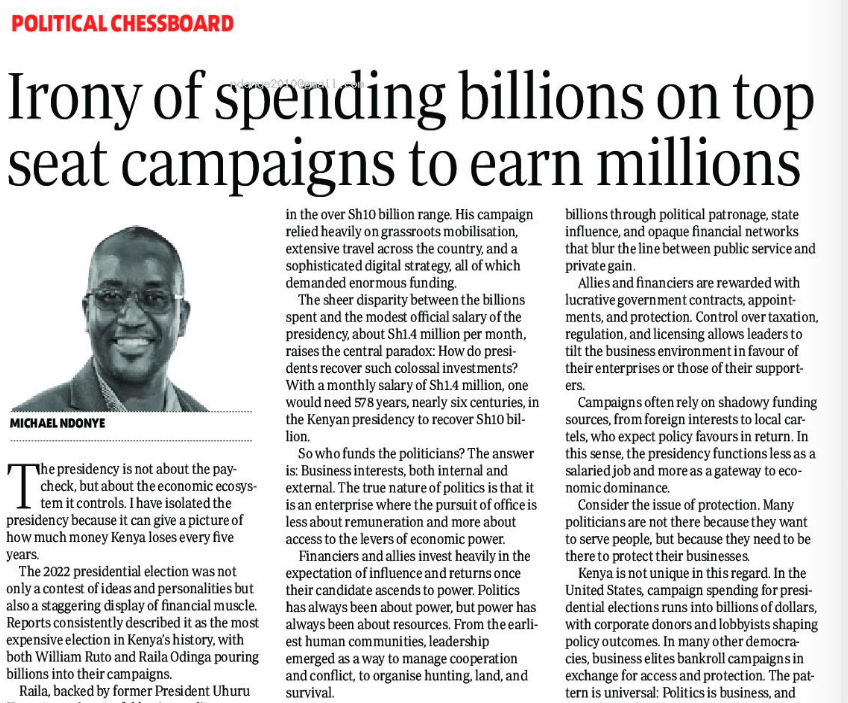
According to him, sustaining a campaign without wealthy backers is nearly impossible. The billion-shilling reality suppresses opportunities for young leaders, women, and marginalized groups.
He has given a picture of how private financiers rarely give without expectation; their money often buys policy favors, leading to state capture and corruption.
“Today, politics is not merely about governance; it is about access to wealth, influence and survival in the competitive marketplace of power," he writes.
Maraga’s donation-driven campaign is a political statement. He is betting that transparency and citizen ownership can puncture Kenya’s entrenched financing culture. But the question remains: can small contributions and volunteer energy withstand the billion-shilling machinery of traditional campaigns?
The #UkatibaCaravan may mobilize Gen Z, but sustaining momentum against entrenched interests will test whether Maraga’s model is a genuine reset or a symbolic gesture.
Maraga’s experiment forces Kenyans to confront a deeper truth: democracy is not only about ballots, but about who pays the bills. If citizens fund campaigns, they may reclaim politics from the marketplace of wealth. If not, Ndonye’s warning stands—the game remains rigged for the rich.
Stay connected with us on WhatsApp and Facebook for instant updates and breaking news as it happens.