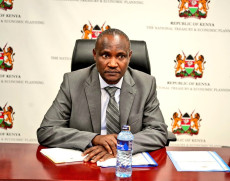
- Advocate Steve Ogolla warns that even Cabinet Secretaries (CSs) are using their offices to advance the President’s re‑election agenda. He argues that when CSs take aggressive political postures, they risk excluding citizens who do not align politically, potentially locking them out of development projects.
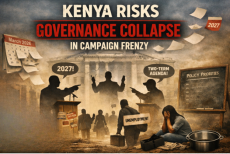
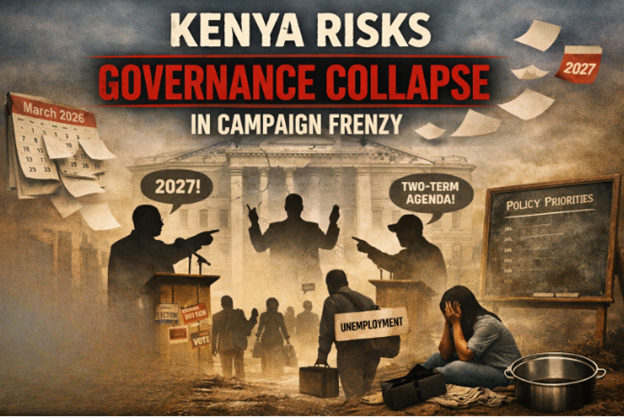
It is only the third month of 2026, yet the political atmosphere already feels like an election year. Alliances are shifting, politicians are touring regions, and conversations in political circles revolve less around policy and more around 2027 calculations. Kenya risks slipping into a state of permanent campaigns, with leaders forming new political outfits to stake early claims.
President William Ruto rose to power on the promise of uplifting ordinary citizens through the bottom‑up economic model. Kenyans expected decisive action on the high cost of living, unemployment, and public debt. Instead, early political positioning is beginning to overshadow governance. When leaders obsess over re‑election strategies, service delivery inevitably suffers.
The opposition is no different. Figures in the Orange Democratic Movement (ODM) party figures are reorganizing, engaging in coalition talks, and consolidating regional power bases.
These maneuvers suggest that the 2027 race has unofficially begun. While competition is healthy in a democracy, it becomes dangerous when it distracts from national priorities and reduces Parliament to a theatre of political drama rather than a watchdog for accountability.
The consequences are already visible. Development projects risk being launched for optics rather than long‑term impact. Public debate is shifting from policy solutions to personal attacks and ethnic mobilization.
Read More
Meanwhile, ordinary Kenyans continue to struggle with expensive food, heavy taxes, and limited job opportunities. They need results, not rallies. They need stability, not slogans.
Advocate Steve Ogolla warns that even Cabinet Secretaries (CSs) are using their offices to advance the President’s re‑election agenda. He argues that when CSs take aggressive political postures, they risk excluding citizens who do not align politically, potentially locking them out of development projects.
“The CSs should not use their offices to advance the re election of the President,” he notes.
He notes that early campaigns are often triggered by the administration in power, leaving the opposition little choice but to respond in kind. In this unhealthy competition, service delivery is compromised, and the government itself risks undermining its re‑election chances by focusing on politics year‑round instead of governance.
Ogolla cites a World Bank report, Devolution without Disruption (2012), which observed that as political seasons set in, priorities shift toward visible projects designed to secure votes rather than initiatives that deliver real impact. Kenya appears to be repeating this cycle, with leaders prioritizing optics over outcomes.
Democracy thrives on competition, but it also depends on responsible leadership. Kenya cannot afford years of campaigning disguised as governance. Leaders must remember that their primary duty is to serve, not to strategize for the next election. The real campaign should be against poverty, corruption, and inequality—not against each other. Kenya cannot afford a permanent campaign.
Stay connected with us on WhatsApp and Facebook for instant updates and breaking news as it happens.