
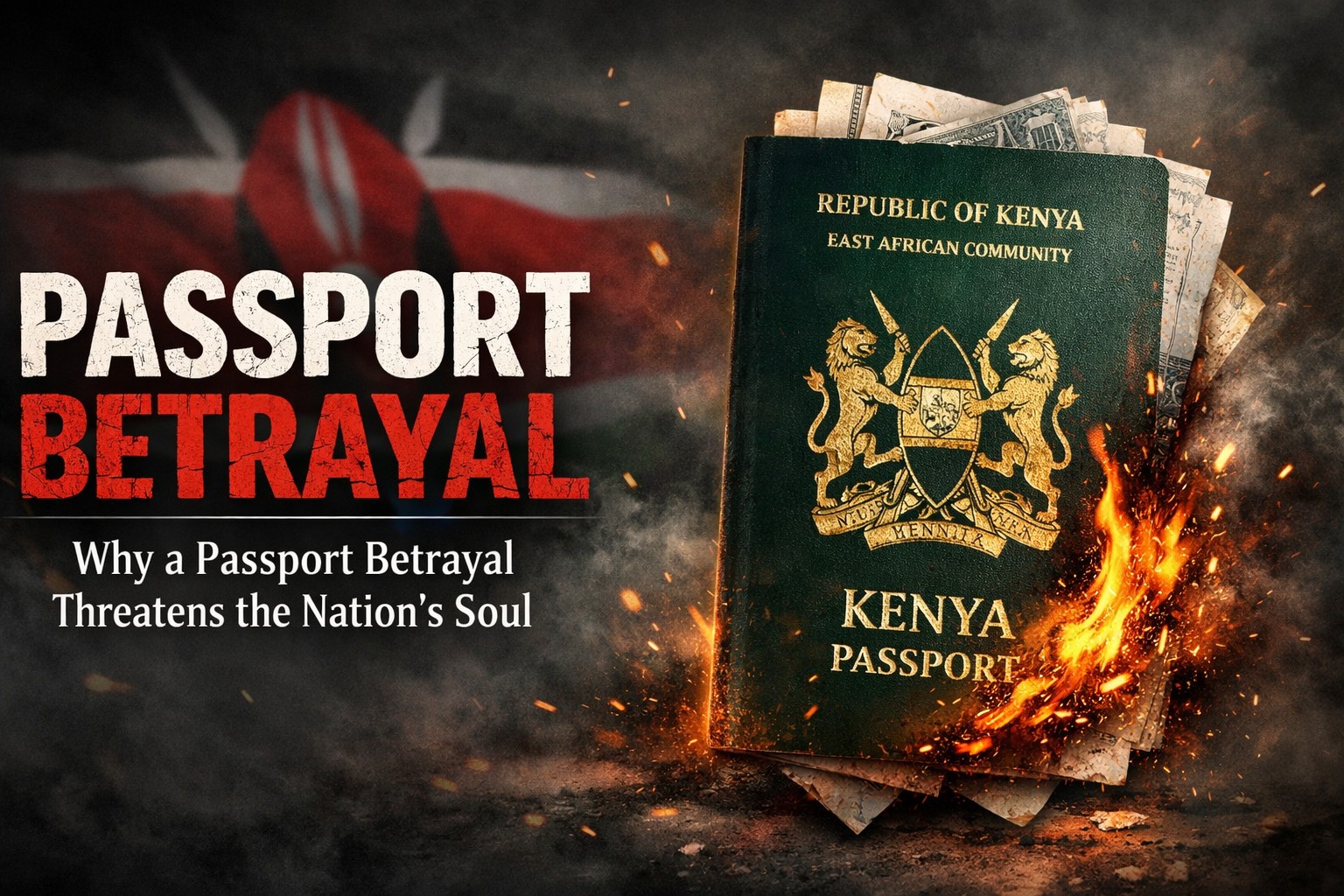
- If the allegations are true, these are not ordinary cases; they represent a direct breach of Kenya’s citizenship laws, which require birth, descent, or documented residency.
There is something sacred about a Kenyan passport. It is more than a small booklet; it is a declaration of who we are, a claim to belonging, a legal acknowledgment of our rights and dignity. Yet recently, that trust has been shaken to its core.
The crisis began with a leak shared on social media by activist and 2027 presidential hopeful Boniface Mwangi on February 26, 2026. He revealed documents suggesting that foreign nationals, some with controversial backgrounds had been granted Kenyan passports outside the legal framework.
Ordinarily, the process is clear: applicants must hold a Kenyan National ID, register through eCitizen, and pay the required fees. But Mwangi’s exposé raised disturbing questions: whose accounts were used to process these applications? Were payments bypassed through “zero tokens”? Why were immigration officers instructed to treat certain applicants as “VIPs” and issue express passports?
Among the names listed were Zimbabwean businessman Wicknell Chivayo, a frequent visitor to State House, and individuals linked to Sudan’s paramilitary leader Mohamed Hamdan Dagalo, known as Hemedti whose forces have been accused of war crimes.
If the allegations are true, these are not ordinary cases; they represent a direct breach of Kenya’s citizenship laws, which require birth, descent, or documented residency.
Read More
Mwangi’s revelations reframed the issue as one of national security and constitutional integrity. A passport is not merely a travel document, it is a declaration of citizenship. When it is carried by someone who is not Kenyan, it alters how the world sees Kenya and how Kenyans see themselves.
The fallout was swift. Former Chief Justice David Maraga warned that such practices erode trust in Kenya's role as a regional mediator under the Intergovernmental Authority on Development (IGAD) framework and risk tarnishing the nation's international standing, potentially leading to degraded passport credibility globally.
Meanwhile, ordinary Kenyans who endure long queues, delays, and bureaucracy to obtain passports reacted with outrage and disbelief. The idea that others can bypass the system entirely has fueled suspicion and eroded trust.
Across social media, satire and anger mix, but beneath it all lies a profound unease: if passports can be sold, what does it mean for fairness, accountability, and the rule of law?
The government’s silence has only deepened the crisis. No transparent disclosure of records, no explanation of exemptions, no accountability. In this vacuum, speculation thrives, and trust in institutions—already fragile—crumbles further.
A passport is a bond between citizen and country. When that bond is corrupted, every Kenyan feels the betrayal.
Boniface Mwangi’s revelations demand answers, not silence. Kenya needs transparency, independent investigations, and public engagement. Citizens must be assured that their passports—their identities are protected by a system that works fairly for all. Anything less threatens not just a document, but the very soul of the nation.
Stay connected with us on WhatsApp and Facebook for instant updates and breaking news as it happens.

-1772196257-md.jpg)
-1772181606-md.jpg)



-1772196257-sm.jpg)

-1772181606-sm.jpg)