

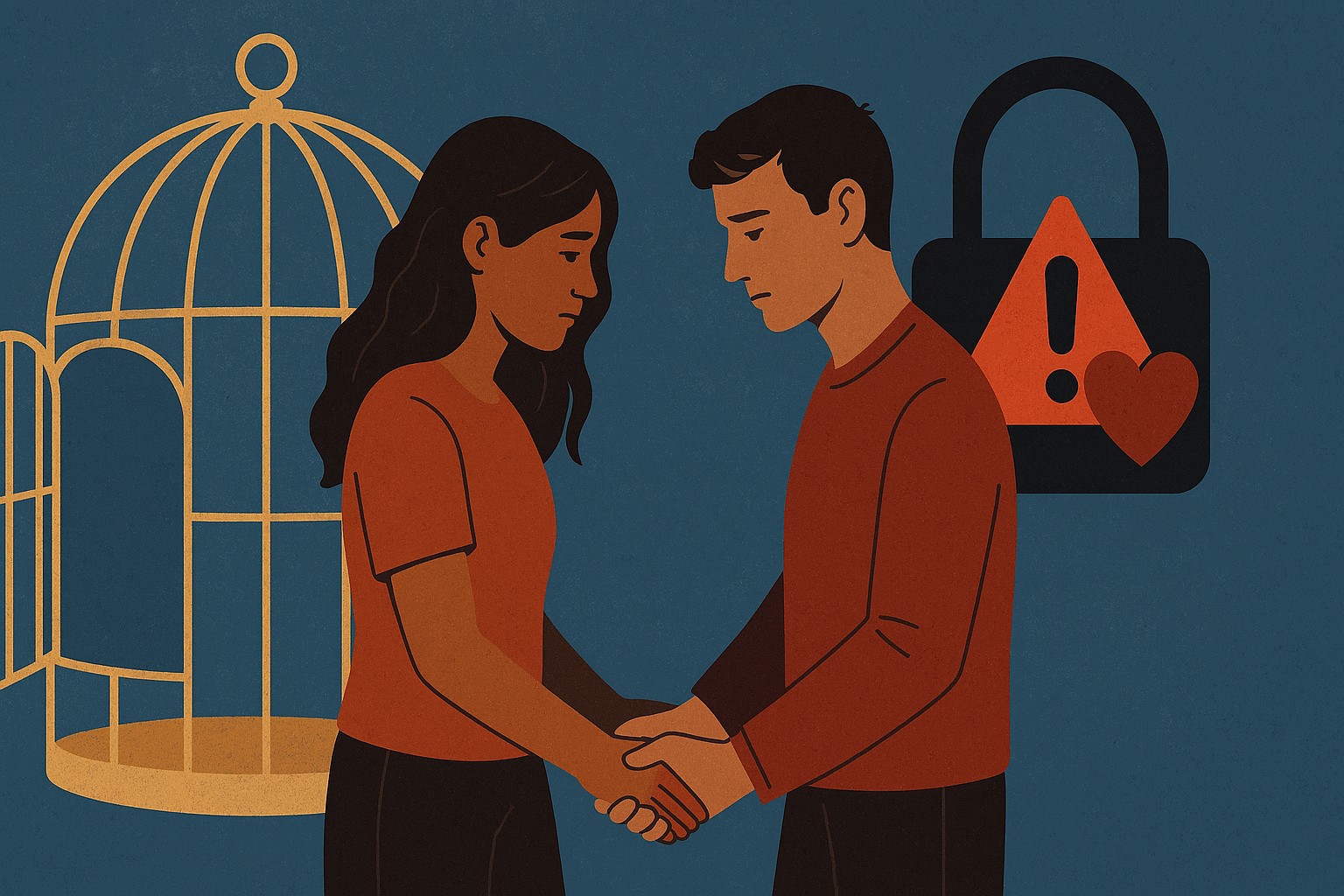
Avoidance hasn’t erased pain; it has reshaped it. Talking stages drag on without clarity. Situationships create attachment without responsibility. Ghosting replaces honest conversations. Open‑ended connections protect the self but carry unresolved feelings forward.
Walk across campus for a single day and the pattern becomes clear. Students are emotionally close, physically present, constantly connected—yet rarely official. They talk daily, text until sleep wins, share secrets, notes, laughs, even beds. But they avoid the simple word: relationship.
Intimacy thrives without intention. Connection exists without direction. In a place crowded with people, commitment has quietly become the most frightening step.
It’s easy to dismiss this fear as immaturity or laziness. That explanation feels shallow. The truth cuts deeper. Many who fear commitment today once loved openly—until the wrong people broke them. Genuine hearts learned that effort isn’t always met with care, and loyalty isn’t always returned. Guardedness became survival.
Our generation didn’t grow up watching love feel safe. We watched marriages collapse, families fracture, relationships turn toxic both offline and online. Love appeared chaotic, conditional, short‑lived. By the time many arrived on campus, they had already internalized the idea that attachment leads to disappointment, and caring too much is dangerous.
University life reinforces this mindset. Campus is temporary, a crossroads of becoming. Everyone chases something—grades, careers, side hustles, identity, purpose. In the middle of that uncertainty, commitment feels heavy. How do you promise stability when you barely understand yourself? How do you build something lasting when your life resets every semester?
Read More
Social media adds another layer. It whispers the illusion of endless options: someone new, someone “better,” someone easier. Commitment begins to feel like closing doors instead of choosing depth. So students keep things casual, undefined, “chill”—mistaking emotional distance for control.
Yet beneath the hesitation lies contradiction. Despite avoiding commitment, many crave its benefits. They want consistency, loyalty, reassurance. They want someone who chooses them even when inconvenient. They want security in a world that feels unstable. They just want it without the risk.
Avoidance hasn’t erased pain; it has reshaped it. Talking stages drag on without clarity. Situationships create attachment without responsibility. Ghosting replaces honest conversations. Open‑ended connections protect the self but carry unresolved feelings forward.
Commitment, when healthy, is not a cage. It is a conscious choice: two people deciding to try, knowing there are no guarantees. It is presence, not perfection. It is showing up honestly, communicating through discomfort, choosing effort over escape.
Still, fear of commitment isn’t always irrational. Our generation has learned to spot red flags, set boundaries, and reject imbalance. That awareness is growth. The problem begins when self‑protection hardens into isolation.
The struggle is balance. Independence without loneliness. Freedom without emptiness. Love without vulnerability. Real connection has always required risk. Commitment demands intentionality in a world built on convenience. Choosing to commit—healthily, consciously, honestly—may not be weakness at all. It may be a quiet form of courage in an uncertain world.
Stay connected with us on WhatsApp and TikTok for instant updates and breaking news as it happens.