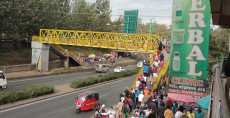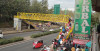

- The footbridge opposite CIGMA Plaza and Nakuru Railway Station, on the way to the Provincial General Hospital, stands as a familiar landmark.
If you travel through Section 58 or Nakuru’s CBD, especially from the eastern entrance of the city, you cannot miss the Nakuru Highway Overpass.
The footbridge opposite CIGMA Plaza and Nakuru Railway Station, on the way to the Provincial General Hospital, stands as a familiar landmark.
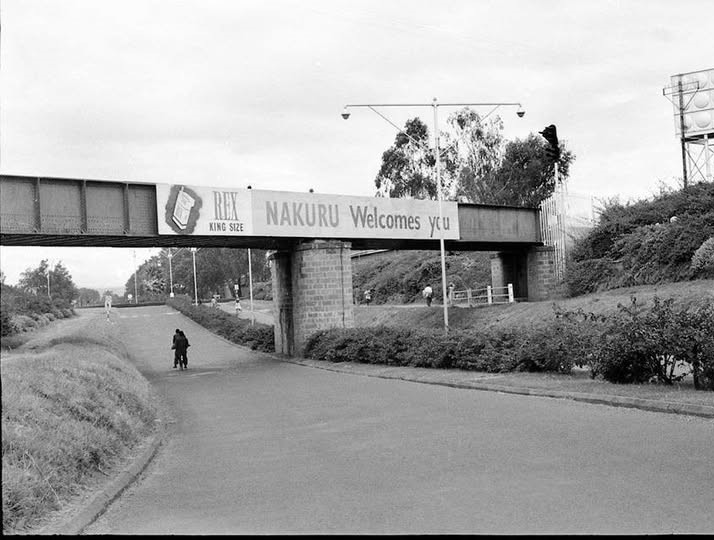
Recently, I stumbled upon an old photograph on Facebook showing the bridge in the 1950s and 1960s. It looked spotless. The neatness reflected a smaller population, a city still growing into itself.
Read More
By contrast, the 2019 census recorded 367,183 residents in Nakuru’s urban core and more than 570,000 in the municipality. Nakuru County ranked third in population after Nairobi and Kiambu. By 2026, the city’s urban population has risen to about 471,000—city status clearly accelerated that growth.
The bridge itself carries history. Local traders recently rehabilitated it, cleaning the area and planting a vegetable nursery. Yet its story stretches back decades.
Photographic evidence places the flyover near the Gate House roundabout as early as 1952. It supported Nakuru’s expansion, reinforced by the opening of the modern railway station in 1957 by Governor Sir Evelyn Baring.
The bridge was more than concrete and steel; it was a solution. As the Uganda Railway—infamously called the “Lunatic Line” reached Nakuru in 1900, traffic grew. The overpass separated road vehicles from busy railway tracks, keeping the town’s arteries flowing. Today, it still greets motorists entering the CBD from the Nairobi side, a sentinel of continuity.
Residents recall its past with nostalgia. Some remembered how clean the bridge once looked, some even joking that the city had been ‘bewitched’ to lose its neatness.
"Look at the neatness… aki who bewitched us."
“Another commuter lamented, "The above photo talks in a thousand words."
People spoke of bicycles gliding freely, of a city once spotless, and of pride in being born in Nakuru during the ’60s and ’70s.
Others remembered seeing the bridge every day during their school years, the structure etched into their daily routines.
One voice confessed how painful it feels to witness the city’s decline in cleanliness, a stark contrast to the past.
“This kills me when I think of how dirty we’ve become.”
Another reflected proudly on being born in Nakuru during the 1960s and 1970s, only to wonder aloud what changed along the way.
“We were born in Nakuru in the ’60s and ’70s. What happened?”
The bridge embodies Nakuru’s paradox: a city proud of its heritage yet struggling with modern pressures. Once pristine, now burdened by population and neglect, it remains a landmark that tells the story of Nakuru’s rise. Its steel frame whispers of the past, while its present condition challenges residents to reclaim civic pride.
What story will the overpass tell about us fifty years from now? Share your thoughts in the comments section below.
Stay connected with us on WhatsApp and Facebook for instant updates and breaking news as it happens.