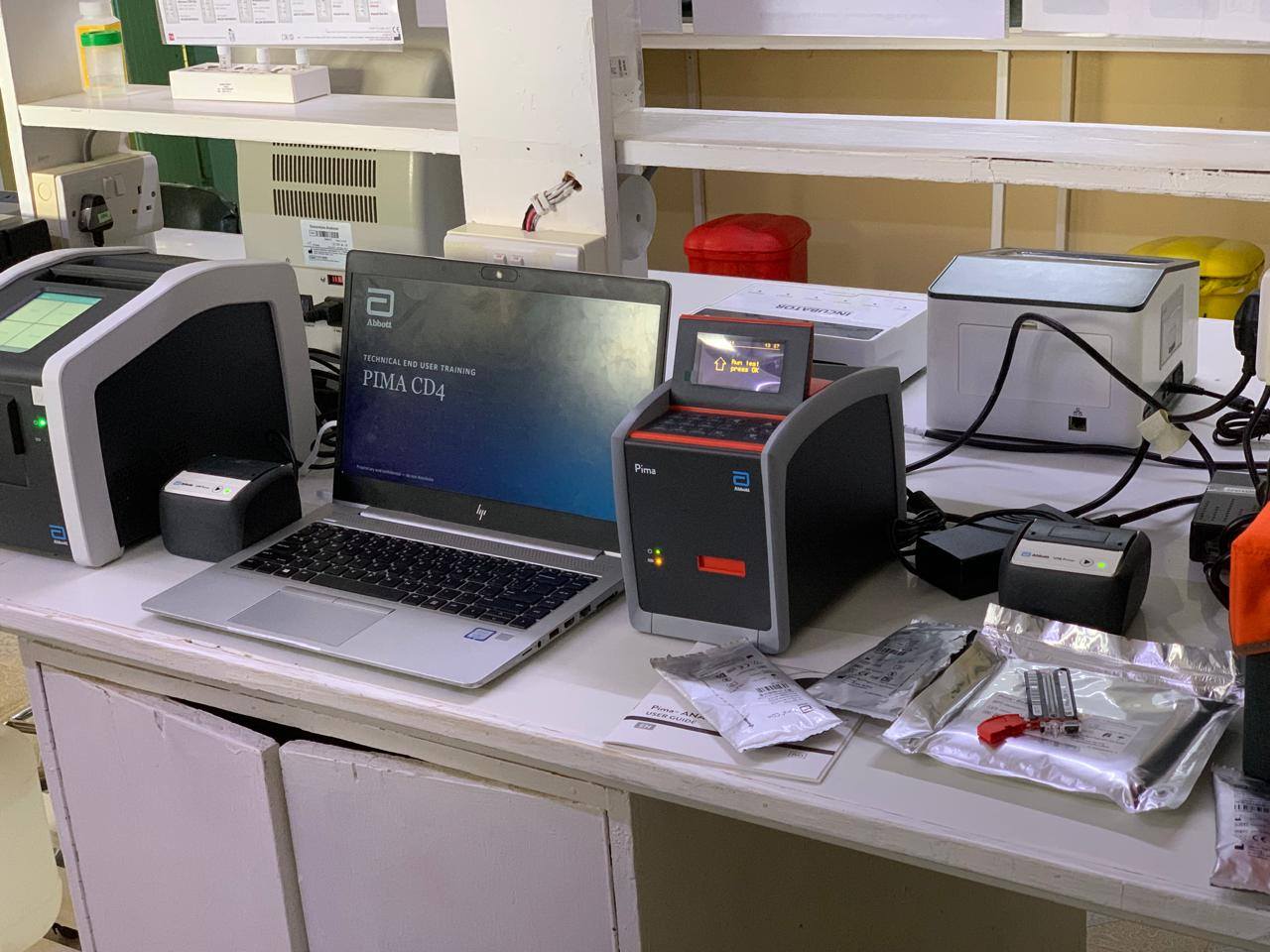
- The County Government notes that previously, many samples had to be referred to distant laboratories, delaying results and treatment decisions. With this new equipment, clinicians can monitor treatment progress, assess patients’ immune status, and diagnose HIV in exposed infants much faster.
Access to advanced Human Immunodeficiency Virus (HIV) diagnostics has received a major boost in Nakuru County. Gilgil Sub County Hospital now hosts a state‑of‑the‑art laboratory machine capable of conducting viral load testing, CD4 analysis, and Early Infant Diagnosis (EID) on site.
The County Government notes that previously, many samples had to be referred to distant laboratories, delaying results and treatment decisions. With this new equipment, clinicians can monitor treatment progress, assess patients’ immune status, and diagnose HIV in exposed infants much faster.
Viral load testing remains the most effective way to track how well treatment is working, while early infant diagnosis enables life‑saving interventions for babies born to HIV‑positive mothers.
“This investment strengthens Nakuru’s laboratory capacity and improves access to timely diagnostics for residents, particularly mothers and children. It supports the county’s broader efforts to enhance HIV care, reduce mother‑to‑child transmission, and improve overall health outcomes,” the County Government noted in a post on Facebook.
In the week ending March 7, 2026, the County Department of Health Services convened a technical planning forum to contribute to the Kenya AIDS Integration Strategic Framework (KAISF) County Operational Plan.
Read More
Working with the National Syndemic Diseases Control Council, Nakuru’s health officers translated national strategies into practical county‑level actions aimed at ending HIV and other syndemic diseases as public health threats.
Key technical officers including health planning units, pharmacy, HIV and STI coordination, health records, and multisectoral coordination participated to ensure an integrated, data‑driven plan.
The framework strengthens Nakuru’s preparedness to implement impactful interventions that improve prevention, treatment, and care outcomes by aligning county priorities with national frameworks.
Globally, HIV remains a major public health threat, having claimed an estimated 44.1 million lives since the epidemic began. While antiretroviral therapy (ART) has transformed HIV into a manageable chronic condition, unequal access to care and late diagnosis still cause hundreds of thousands of preventable deaths annually.
Nakuru is also embracing innovation in prevention. On March 9, 2026, the County Government noted that the County Department of Health is sensitizing healthcare workers from Nakuru East/West and Bahati sub counties on the use of long‑acting Pre‑Exposure Prophylaxis (PrEP) at Nakuru County Referral and Teaching Hospital, with similar sessions in Gilgil and Njoro.
Long‑acting PrEP provides highly effective, discreet HIV prevention through injections or implants rather than daily pills. Options include Lenacapavir, a twice‑yearly injection, and Apretude (cabotegravir), a bi‑monthly injection. Kenya has already initiated the rollout of Lenacapavir, now available in Nakuru.
When taken as prescribed, PrEP reduces the risk of contracting HIV through sexual contact by about 99 percent, and by at least 74 percent among people who inject drugs.
Stay connected with us on WhatsApp and Facebook for instant updates and breaking news as it happens.