- The name “Kikopey” is believed to come from a Maasai phrase describing a place where green vegetation dries and turns pale—a nod to the seasonal grasslands of the Rift Valley. Long before highways, this was a natural resting point for pastoralists and travelers moving across the region.
As you travel towards Nairobi from Nakuru or from Nairobi towards Nakuru there’s a stretch of highway where the journey itself seems to pause. The smoke rises first, then the scent: goat meat sizzling over open flames, trucks slowing, families gathering, laughter spilling from roadside grills. This is Kikopey. But do you know its story?
Kikopey is famous for one thing above all else: nyama choma, especially goat meat. Durable, flavorful, and perfect for slow roasting, goat meat doesn’t demand refrigeration or elaborate preparation. For travelers and drivers, it offers strength, warmth, and satisfaction after hours on the road.
Why Travelers Stop Here
For truck drivers, Kikopey is more than a food stop, it’s relief. The stretch before Kikopey is long and exhausting. Drivers need quick service, hot food, safe parking, and familiar surroundings. Kikopey delivers all of this without ceremony. Meat is already roasting, tea is boiling, and there are no menus or delays. You eat, rest, stretch, and continue. Over time, bus companies, private motorists, and families adopted the same habit, and Kikopey became a fixed point on the journey.
Kikopey’s growth mirrors Kenya’s road culture. What began as a few grills serving passing herders grew into a thriving hub as highway traffic increased. Word spread the Kenyan way through recommendation: “Ukifika hapo, lazima uchomewe nyama.” Today, Kikopey is known across the country not because of advertising, but because of experience.
Read More
The name “Kikopey” is believed to come from a Maasai phrase describing a place where green vegetation dries and turns pale—a nod to the seasonal grasslands of the Rift Valley. Long before highways, this was a natural resting point for pastoralists and travelers moving across the region.
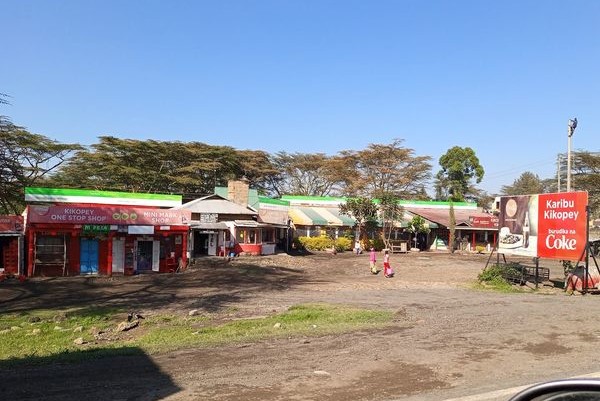
Kikopey lies in Gilgil Sub‑County, Nakuru County, along the busy Nairobi–Nakuru highway in the Great Rift Valley. Almost midway between Nairobi and Nakuru, it is perfectly placed for travelers heading westward to Rift Valley towns or onward to Uganda. Its open landscape, easy roadside access, and proximity to livestock‑rearing areas made it a natural hub for trade and food businesses.
Kikopey is not densely packed, but it is alive. Its population is made up of traders, meat sellers, livestock brokers, roadside vendors, and families whose livelihoods depend on highway traffic. Communities here Kikuyu, Maasai, Luo, and others are united less by tribe than by the road.
The broader Gilgil municipality, which includes Gilgil, Kikopey, and Langalanga, had a population of 80,079 according to the 2019 census. Life in Kikopey follows traffic patterns: evenings, weekends, and holidays bring crowds, and when trucks arrive, business blooms.
Sit long enough and you’ll see it: strangers sharing tables, drivers exchanging stories, families laughing mid‑journey. Smoke rising, meat cracking on fire, time slowing down. Kikopey doesn’t rush you. It doesn’t impress you. It simply feeds you—body and spirit.
Once you stop at Kikopey, you don’t just remember the meat. You remember how it made the journey feel complete.
Have you ever stopped at Kikopey? What did you eat, who did you meet, and what made the moment unforgettable? Share your roadside memories—because every journey deserves a story.
Stay connected with us on WhatsApp and TikTok for instant updates and breaking news as it happens.