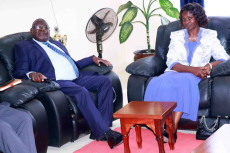

- PS Muthoni wants Kenyans to actively encourage women to go for screening, not just talk about it. “Go out there and tell women to go for screening. This illness takes away so many women who are the backbone of families and communities," she said.
The Principal Secretary for Public Health and Professional Standards, Mary Muthoni, recently shared her personal encounter with cancer during the launch of the Kenya National Cervical Cancer Elimination Plan (2026–2030).
“I am not very happy because of the very high number of people we continue to lose in this country to cancer. In my own family, I have lost three people,” she said. “But I am also happy on the flipside because we are launching the Kenya National Cervical Cancer Elimination Plan. At least this gives us guidance and allows us to pull our socks.”
Muthoni emphasized that the plan is about protecting mothers, sisters, wives, daughters, and friends so that no woman dies from a disease that can be prevented. She recalled that the initiative began during National Cervical Cancer Awareness Month in Nyandarua last year, and has now grown into a nationwide commitment.
“We have listened to doctors, community leaders, and everyday Kenyans. It is time to turn those talks into real action. If we work as a team, just as our harambee spirit built this nation, then we can achieve anything. It is not a one‑man show, it is not just a Ministry’s show, but it must involve everybody coming together,” she added.
PS Muthoni wants Kenyans to actively encourage women to go for screening, not just talk about it. “Go out there and tell women to go for screening. This illness takes away so many women who are the backbone of families and communities," she said.
Read More
She emphasizes that the disease is preventable through vaccines, regular check‑ups, and early treatment, insisting that waiting is no longer an option.
“Let us act now. Let us fold our sleeves and go to the communities. We must leave the boardrooms and get to where the women are,” she said.
Muthoni praised community health promoters as real heroes, promising continued training and support so they can deliver basic health education to women across the country.
She stressed that the State Department of Public Health and Professional Standards will work hand in hand with the State Department of Medical Services, county governments, and partners to ensure that implementation is thorough, with no shortcuts, and that rural women benefit from free screening.
“Ending cervical cancer sounds tough, but it is doable. Remember how Kenya rolled out Covid‑19 vaccines even to the hardest‑to‑reach areas. We must do the same for millions of women,” she said.
On January 15, 2026, Cabinet Secretary for Health Aden Duale presided over the launch of the elimination plan, signaling renewed national commitment to protect the lives and health of Kenyan women and girls.
Cervical cancer remains the second most common cancer among women in Kenya, with about 5,845 new cases and 3,600 deaths every year. Despite being preventable through vaccination, screening, and timely treatment, it continues to pose a major public health challenge.
Kenya officially recognizes January as National Cancer Awareness Month, a time when the Ministry of Health spotlights prevention, screening, treatment, and policy action, with special focus on cervical cancer.
Stay connected with us on WhatsApp and Facebook for instant updates and breaking news as it happens.