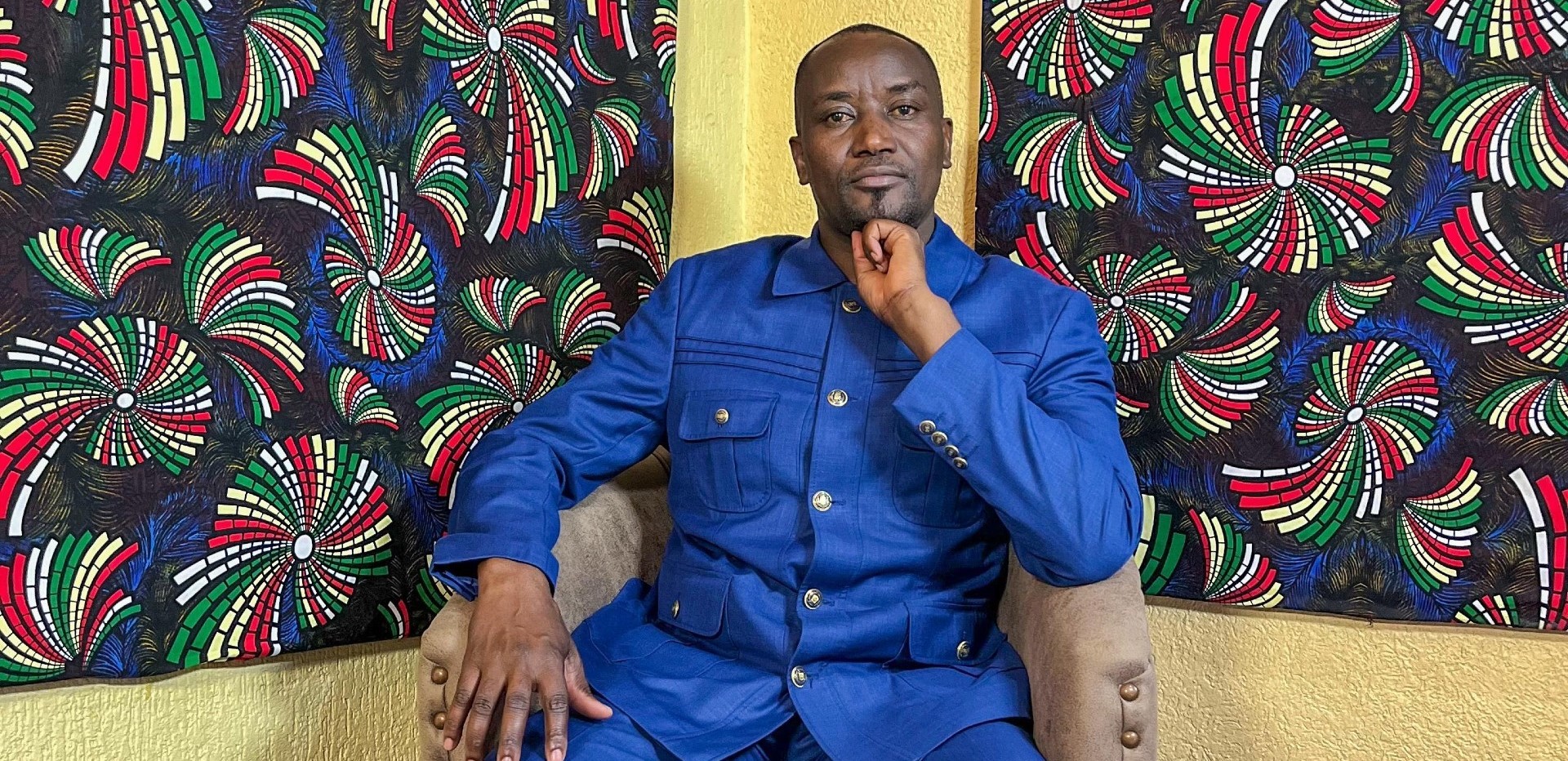
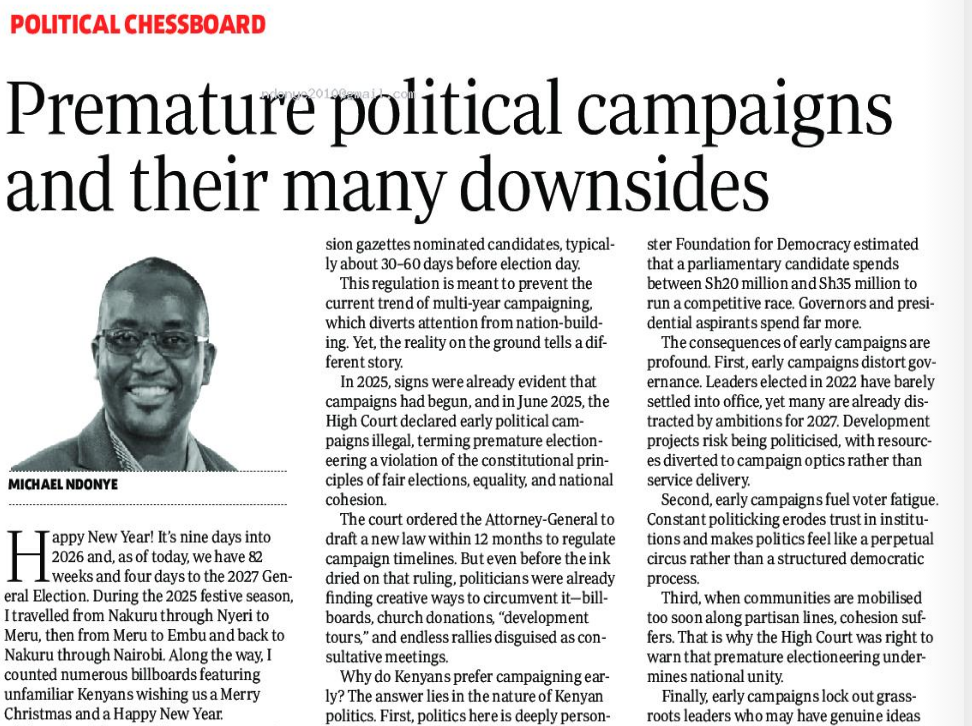
- In the Political Chessboard Column published in the Standard Newspaper on January 9, 2026, Dr. Ndonye explains that campaigns usually start early because politics in Kenya is deeply personalized. “Candidates rely heavily on name recognition, tribal affiliation, and visibility, and an early start ensures voters associate a face with leadership long before the ballot,’ he says.
Political analyst Dr. Michael Ndonye warns that the consequences of early campaigns in Kenya are profound. According to him, development projects risk being politicised, with resources diverted into campaign optics rather than service delivery.
Constant politicking, he argues, fuels voter fatigue, erodes trust in institutions, and makes politics feel like a perpetual circus rather than a structured democratic process. Communities mobilized too soon along partisan lines suffer cohesion, while grassroots leaders with genuine ideas are locked out because they lack the financial muscle to endure marathon campaigns.
In the Political Chessboard Column published in the Standard Newspaper on January 9, 2026, Dr. Ndonye explains that campaigns usually start early because politics in Kenya is deeply personalized. “Candidates rely heavily on name recognition, tribal affiliation, and visibility, and an early start ensures voters associate a face with leadership long before the ballot,’ he writes.
Read More
“Competition is fierce, with 1,450 wards, 47 counties, 290 constituencies, and thousands of aspirants all vying for attention. Those who wait until the official campaign period risk being drowned out,” he writes.
According to him, starting early also allows candidates to spread costs over several years rather than compressing them into a few months.
Campaigning in Kenya is highly visible, resource‑intensive, and often controversial, with political activity beginning years before official election periods despite legal restrictions. Dr Ndonye notes that as of early 2026, premature campaigns for the 2027 General Election are already underway, marked by billboards, rallies, and public endorsements.
Politicians employ a range of strategies: billboards and posters with festive greetings, rallies and roadshows filled with music and branded merchandise, grassroots mobilization through church visits and market appearances, digital campaigning on platforms like Facebook, X, and TikTok, and coalition building through early alliances.
Together, these tactics illustrate how Kenya’s campaign culture has become a permanent fixture in daily life, shaping governance, straining institutions, and redefining democracy as a constant performance.
Stay connected with us on WhatsApp and Facebook for instant updates and breaking news as it happens.