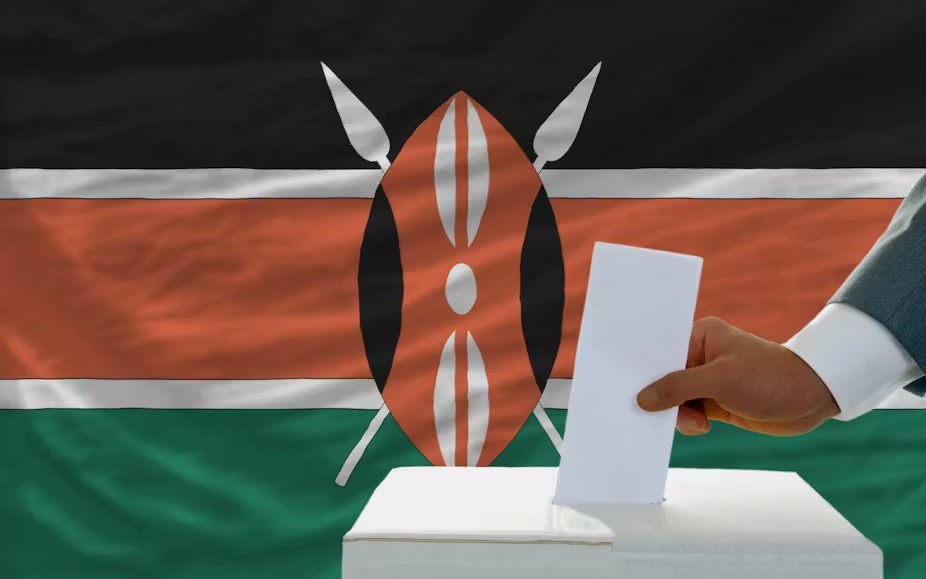
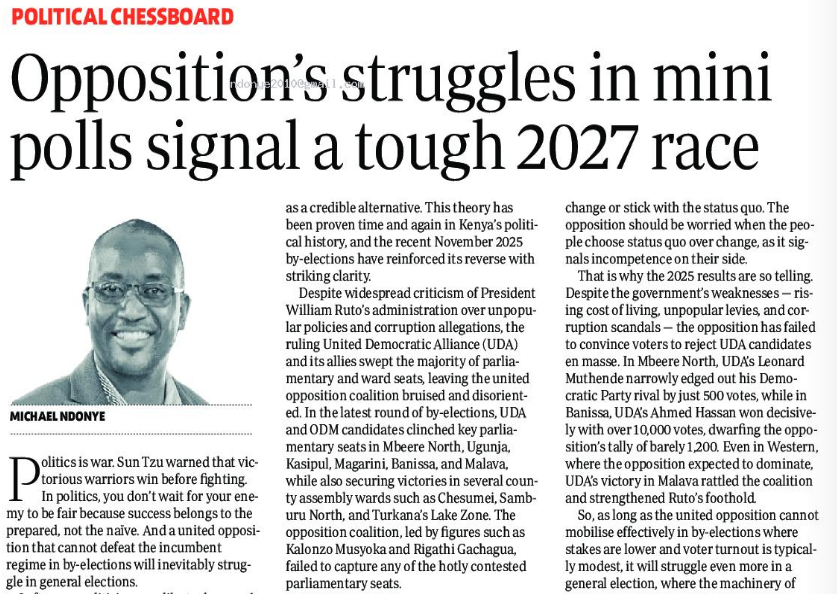
- In the Political Chessboard column titled, ‘Opposition’s struggle in mini polls signal a tough 2027 race’ published on December 5, 2025 on the Standard Newspaper, Dr Ndonye says the recently concluded by‑elections tell this story vividly.
Political analyst Dr. Michael Ndonye argues that a United Opposition unable to defeat the incumbent government in by‑elections will inevitably falter when the stakes rise in General Elections.
To him, the message is clear: if citizens express dissatisfaction yet still choose ruling party candidates, it signals that the opposition has failed to present itself as a credible alternative.
In the Political Chessboard column titled, ‘Opposition’s struggle in mini polls signal a tough 2027 race’ published on December 5, 2025 on the Standard Newspaper, Dr Ndonye says the recently concluded by‑elections tell this story vividly.
Read More
The ruling United Democratic Alliance (UDA), working in alliance with the Orange Democratic Movement (ODM), swept all parliamentary seats that were contested. Meanwhile, figures within the United Opposition, including Kalonzo Musyoka and Rigathi Gachagua, failed to secure victories in regions that were highly contested.
“This outcome is abnormal in Kenya’s electoral traditions, where incumbents often lose by elections as a reflection of public discontent,” he says.
He draws parallels with history to underscore the gravity of the moment. During Mwai Kibaki’s regime, the opposition successfully challenged him in multiple by‑elections, culminating in defeat during the 2005 referendum. In Uhuru Kenyatta’s government, William Ruto, then Deputy President, leveraged by‑elections to demonstrate his grassroots strength and build momentum. By contrast, today’s opposition seems unable to harness by‑elections as a platform for credibility.
Dr. Ndonye warns that when people choose the status quo over change, it signals incompetence on the opposition’s side.
“By elections have always served as a barometer of voter sentiment signalling whether the public is ready to embrace change or stick with the status quo,” Dr Ndonye writes.
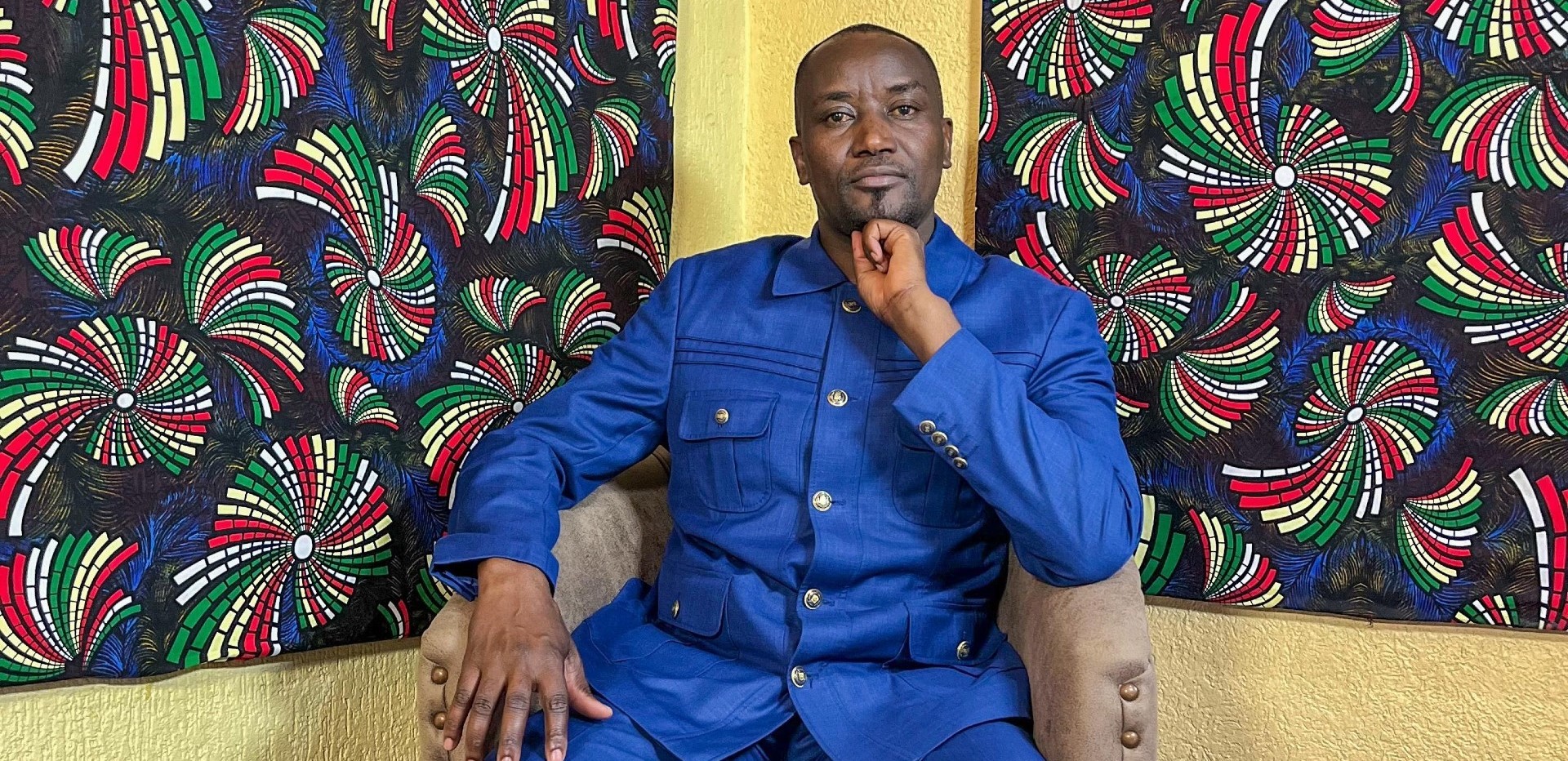
If the opposition cannot mobilize effectively in contests where stakes are lower and turnout modest, he cautions, it will struggle even more in the high‑pressure environment of General Elections.
According to him, the losses stem from a lack of strategy, weak grassroots organization, and failure to present a compelling alternative vision. He further critiques their reactive posture, where they criticize President Ruto’s policies without offering credible solutions.
Unless the United Opposition recalibrates its strategy, strengthens its grassroots appeal, and convinces voters it is a viable government in waiting, Dr. Ndonye concludes, it will find it hard to beat the incumbent regime when the real test comes.
Stay connected with us on WhatsApp and Instagram for instant updates and breaking news as it happens.