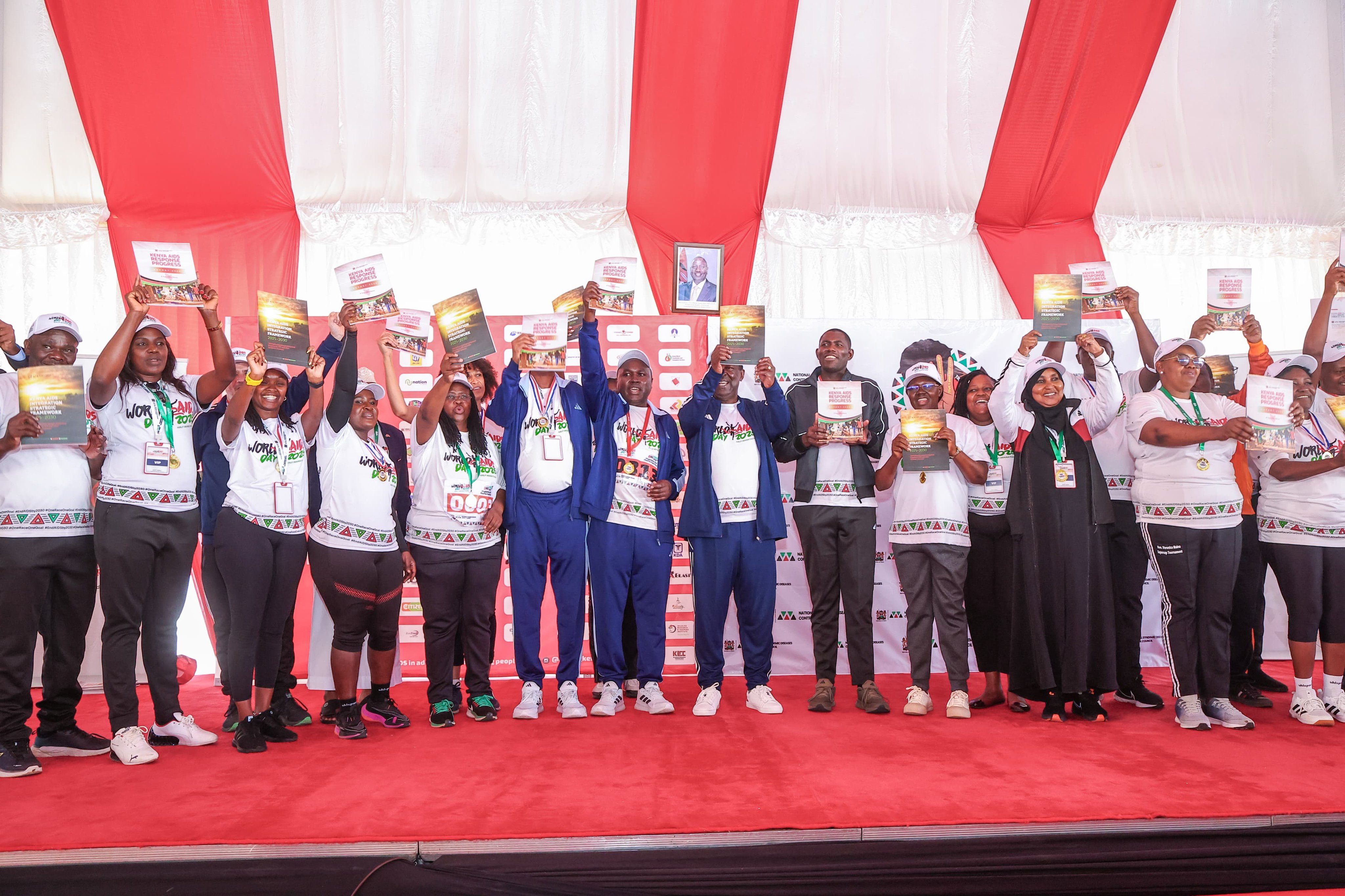
- The launch of the Kenya AIDS Integration Strategic Framework (2025–2030) and the World AIDS Progress Report marked key milestones in strengthening Kenya’s HIV response for the next five years.
On December 1, 2025, people across the world observe World AIDS Day a day to raise awareness about AIDS, honor lives lost, and break the stigma that still surrounds the disease.
AIDS stands for Acquired Immunodeficiency Syndrome. It is the final and most serious stage of infection caused by HIV. HIV attacks the immune system, and if left untreated for a long time, the body becomes too weak to fight off infections, leading to AIDS. At this stage, CD4 counts (immune cells) drop very low, opportunistic infections take hold, and illnesses such as severe pneumonia, tuberculosis, certain cancers, and chronic diarrhea appear.
HIV spreads through unprotected sex, sharing needles, mother‑to‑child transmission during pregnancy, birth, or breastfeeding if untreated, and though rare today due to testing through infected blood transfusions. AIDS has no cure at present, making prevention the most crucial action against it.
In Kenya, President William Ruto has reaffirmed the government’s commitment to ending AIDS as a public health threat by 2030. He has called for stronger prevention, treatment, and youth‑focused support services.
His message was delivered by Prime Cabinet Secretary and Cabinet Secretary for Foreign and Diaspora Affairs, Musalia Mudavadi, during the World AIDS Day Half Marathon at Nyayo National Stadium on November 30, 2025.
Read More
“With 1,326,336 people living with HIV in Kenya, our nation requires Kshs. 30 billion to secure vital commodities for prevention, care, and long‑term management. These numbers remind us that this fight is not just medical, but a national duty to protect our people and secure the wellbeing of future generations,” Mudavadi said.
He has noted that HIV and AIDS remain a major public health challenge, particularly for teenagers and youth, citing teenage pregnancies and new infections as areas of concern. He has also commended Kenya’s progress, with 87% of people infected now on treatment and increased investments enabling HIV‑free births. He also announced that a new injectable HIV treatment will be introduced next year.
“I emphasized the President’s message that HIV and AIDS remain major global health concerns, especially for countries like ours,” he added.
Mudavadi reaffirmed the government’s commitment to ensuring that every Kenyan can access comprehensive prevention, care, and treatment services. He stressed that through continued collaboration with partners, life‑saving medication will reach all who need it.
The launch of the Kenya AIDS Integration Strategic Framework (2025–2030) and the World AIDS Progress Report marked key milestones in strengthening Kenya’s HIV response for the next five years.
Stay connected with us on WhatsApp and Instagram for instant updates and breaking news as it happens.