
- The late Sam Kinuthia stood firmly within the Mugithi tradition. His music was deeply rooted in lived experience, drawing listeners into stories that felt familiar and personal.
In Nakuru County, music is not introduced; it is inherited. For decades, Nakuru has quietly produced some of Kenya’s most influential Kikuyu musicians, artists whose work blurs the line between gospel and secular, faith and festivity.
At the heart of this sound lies Mugithi, the one-man guitar style that has stood the test of time. Few places embody it more deeply than Subukia.
To understand Nakuru’s musicians is to understand community. Most of the county’s well-known artists are Kikuyu, shaped by oral storytelling traditions where music explains life better than conversation ever could. In Nakuru, especially in Subukia, music is how people process grief, celebrate survival, and affirm identity.
Samidoh (Samuel Muchoki)
Perhaps no contemporary artist captures Nakuru’s musical spirit better than Samidoh. Though raised in Ol Joro Orok Constituency in Nyandarua County, Samidoh was born in Subukia, and his life story mirrors the emotional weight carried by many Mugithi songs.
Read More
He turned to music as both refuge and voice. Through songs such as Kairitu Gakwa, Murata Wa Ngai, Niwe Ndarathimiirwo, Riari Itheru, Wendo Maguta, and many others, Samidoh elevated Mugithi from local entertainment to a national genre without stripping it of its rural honesty.
His rise reminded many young musicians from Nakuru that one does not need to abandon home to be heard.
Salim Junior and the Salim Family
Samidoh stands on the shoulders of a longer tradition. Subukia has long been a cradle of guitar music, producing artists who treated one instrument as a full band.
The late Paul Mwangi Salim popularly known as Salim Junior, together with the Salim family before him, transformed Mugithi into a structured performance style built on looping rhythms, call-and-response lyrics, and storytelling that could last an entire night.

Their influence still echoes in today’s performances, where Mugithi artists command crowds with nothing but a guitar, a microphone, and lived experience.
Franco Wasubu
Among the artists who carried this tradition forward is Franco Wasubu, a name familiar to Mugithi lovers in Nakuru and beyond. His music sits comfortably between reflection and celebration.

His songs speak to everyday Kikuyu life relationships, responsibility, faith, and social conduct delivered in a style that makes listeners feel personally addressed. Like many Nakuru musicians, his strength lies not just in melody but in relatability. He sings like someone seated among the audience, not above it.
The Late Sammy Muraya
That same grounded quality defined the late Sammy Muraya, another Mugithi artist whose work resonated strongly with local audiences. He represented a generation of musicians who matured in an era where Mugithi was already popular but still demanded authenticity.
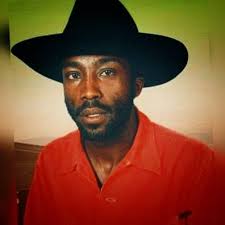
His music reflected social realities and moral conversations within the community, slow, deliberate, and deeply message-driven. A clear example is his song Mama Kiwinya, which tells the story of a young man who enters a romantic relationship with an older woman purely for financial gain.
What begins as an opportunistic arrangement soon turns into a trap as the young man becomes emotionally and socially entangled, struggling to walk away.
Through this narrative, the artist explores desperation, power imbalance, and the consequences of transactional relationships, cautioning listeners against choices driven by short-term comfort rather than long-term wisdom.
The late Sam Kinuthia
The late Sam Kinuthia stood firmly within the Mugithi tradition. His music was deeply rooted in lived experience, drawing listeners into stories that felt familiar and personal.
Songs such as Nyina wa Mami and Maitu Nowe Kiboko paid tribute to motherhood, celebrating unconditional love and sacrifice. Other tracks like Muiritu wa Gikomba, Muiritu wa Narok, and Mutumia Murogi explored romantic relationships and social caution through vivid, character-driven storytelling.
Sammy Irungu
Nakuru County’s musical identity extends beyond secular performances. Sammy Irungu represents this evolution, showing how Kikuyu music comfortably crosses into gospel expression without losing its cultural depth.
Irungu hails from Olenguruone, Molo in Nakuru County.

His music carries strong spiritual themes, appealing to older audiences raised on traditional sounds and younger listeners shaped by modern influences. His work reflects how closely faith and daily life are intertwined within the county.
The blending of gospel and secular music is one of Nakuru County’s defining musical characteristics. Many artists begin singing in church choirs, refine their skills in gospel music, and later cross into Mugithi or mainstream Kikuyu music. Others move fluidly between the two, performing gospel songs on Sunday and Mugithi sets at social gatherings.
Rather than contradiction, this reflects how faith and everyday life coexist naturally in Nakuru.
Avril (Judith Nyambura Mwangi)
Nakuru town has played a quieter but equally important role by providing exposure, studios, and access to audiences beyond the village.

Artists like Avril, who grew up in Nakuru, demonstrate that the county is not musically one-dimensional. While Mugithi dominates rural spaces, Nakuru town nurtures pop, gospel, and fusion artists who carry the discipline of a small-town upbringing onto national and international stages.
Subukia and the Spirit of Community
Despite this diversity, Subukia remains the symbolic heart of Nakuru’s musical identity. The concentration of Mugithi artists here is no coincidence. Social gatherings are frequent, community ties are strong, and music is central to expression.
In Subukia, a guitarist is not only expected to play well but to understand people’s stories. Mistakes are forgiven if the message is honest. Excellence is celebrated, but humility is required.
What unites Nakuru’s musicians from Samidoh to Franco Wasubu, from Sammy Muraya and Sammy Irungu to Sam Kinuthia is a shared belief that music must speak truth. Whether gospel or secular, Mugithi or pop-influenced, the songs must reflect lived reality.
This is why Nakuru musicians enjoy deep loyalty from their audiences. Fans hear their own struggles, values, and victories reflected in the music.
As Kenya’s music industry grows more digital and commercial, Nakuru’s artists continue to show that authenticity remains powerful, rooted in a place where music belongs to the community and is shaped by culture, belief, and experience.
Stay connected with us on WhatsApp and Facebook for instant updates and breaking news as it happens.