
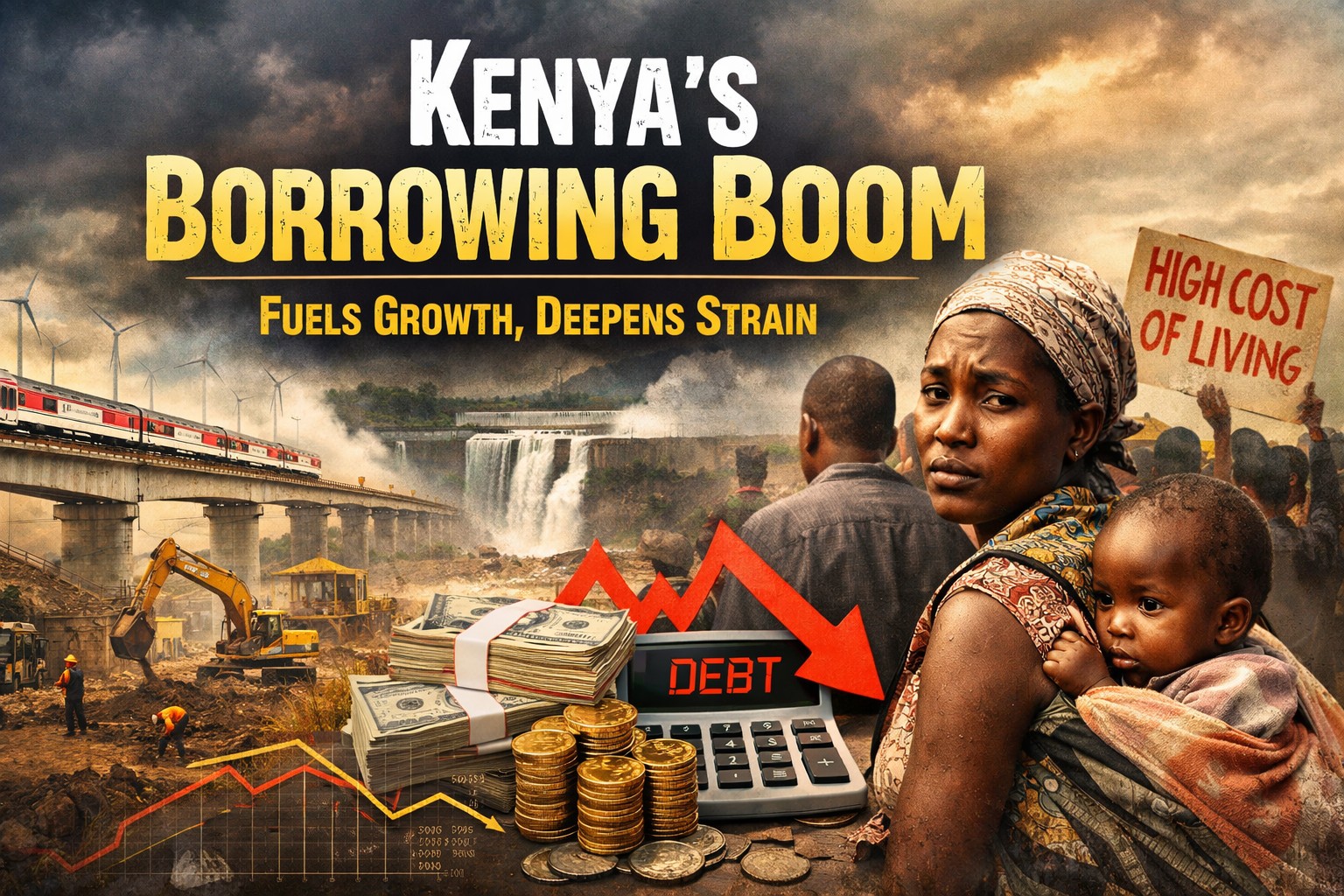
- In June 2024, Generation Z led nationwide protests over rising costs. Citizens demanded change, and youth frustration highlighted the economic stress. Debt‑related policies fueled the unrest.
Kenya is spending more than it earns, and debt has soared over the past three years. By the end of Kenya’s financial year running from July 2024 to June 2025 (FY 2024/25), public debt stood at KSh 11.814 trillion, equivalent to 67.8% of Gross Domestic Product (GDP).
Nearly half of this amount—KSh 5.489 trillion is external debt, according to the Annual Public Debt Management Report 2024/2025.
That same year, Kenya signed 29 new external loan agreements worth KSh 457 billion, with actual disbursements reaching KSh 527 billion. These included a $1.5 billion Eurobond and support from the International Monetary Fund (IMF) and World Bank. By contrast, grants totaled only KSh 31 billion, varying between KSh 20–52 billion annually.
Grants are limited but valuable. They require no repayment, carry no interest charges, and avoid currency risks. They are best suited for social and climate projects. Yet their scale is too small to fund Kenya’s mega‑project ambitions. Grants can only supplement loans, not replace them. Wise use of grants, however, can still protect fiscal health.
Loans: Fast Money, Heavy Price
Read More
Loans deliver cash quickly for large projects. The Standard Gauge Railway connecting Nairobi to Naivasha, the Lamu Port–South Sudan–Ethiopia Transport (LAPSSET) corridor, and the Thwake Dam are underway because of them.
These projects create jobs and boost short‑term growth. But debt comes with a heavy price. In FY 2024/25, debt servicing consumed KSh 1.722 trillion—71.2% of ordinary government revenue. As a result, health, education, and social programs suffer. Commercial loans also expose Kenya to currency and interest risks.
Unchecked borrowing hits ordinary citizens hardest. Taxes rise, subsidies fall, and living costs soar. Job losses and slow growth follow. Inequality widens, and public discontent grows.
In June 2024, Generation Z led nationwide protests over rising costs. Citizens demanded change, and youth frustration highlighted the economic stress. Debt‑related policies fueled the unrest.
National Infrastructure Fund: A New Approach
President William Ruto calls the National Infrastructure Fund (NIF) the most consequential initiative in Kenya’s development history. He insists the fund will empower citizens to become architects of their own future by closing the infrastructure financing gap.
The plan aims to raise over KSh 5 trillion to bankroll flagship projects: 10,000 megawatts of clean energy, 50 mega dams, 200 micro dams, more than 1,000 small dams, 2,500km of dual carriageways, and 28,000km of roads.
Financing will also extend the Standard Gauge Railway from Naivasha to Malaba and Kisumu and expand Jomo Kenyatta International Airport.
Treasury and Economic Planning Cabinet Secretary John Mbadi underscores the fiscal reality. Kenya still faces rising infrastructure demands, yet the budget remains constrained.
The fund, he explained, will shift commercially viable projects out of the national budget and into blended financing with private sector capital. This approach reduces the number of projects funded directly by taxpayers, creating fiscal space and limiting the need for new debt.
Kenya now faces a choice: spend fast or spend smart. Sustainable development requires balance. Smarter borrowing, strategic use of grants, and higher domestic revenue are key. The path chosen will shape the economy and everyday life for millions.
Stay connected with us on WhatsApp and Facebook for instant updates and breaking news as it happens.

-1773832678-md.jpg)



-1773832678-sm.jpg)