
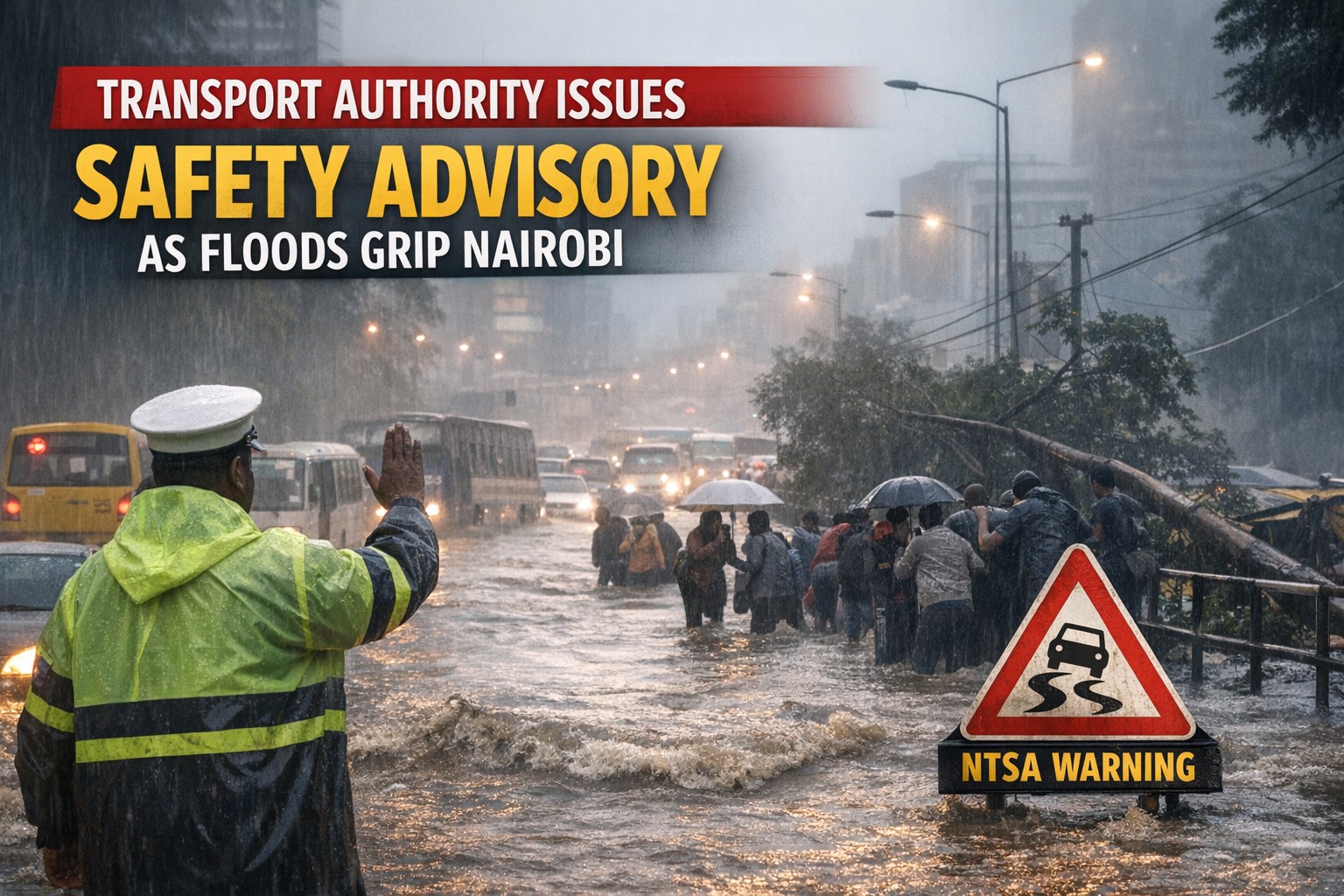
- The deluge, which pounded the capital overnight, turned Kenyatta Avenue, Uhuru Highway, and sections of the CBD into rivers, leaving cars stranded and commuters wading through waist‑deep water.
Heavy rainfall that began on March 6, 2026, has unleashed severe flooding across Nairobi, submerging major roads and grinding the city to a halt.
The deluge, which pounded the capital overnight, turned Kenyatta Avenue, Uhuru Highway, and sections of the CBD into rivers, leaving cars stranded and commuters wading through waist‑deep water.
Residential areas such as South C, South B, and Kilimani bore the brunt, with power outages compounding the chaos.
Videos of submerged vehicles and residents struggling to navigate flooded streets have flooded social media, amplifying the sense of crisis.
The National Transport and Safety Authority (NTSA) has issued a warning: Nairobi’s roads are wet, slippery, and in some areas shrouded in fog, reducing visibility and heightening the risk of accidents.
Read More
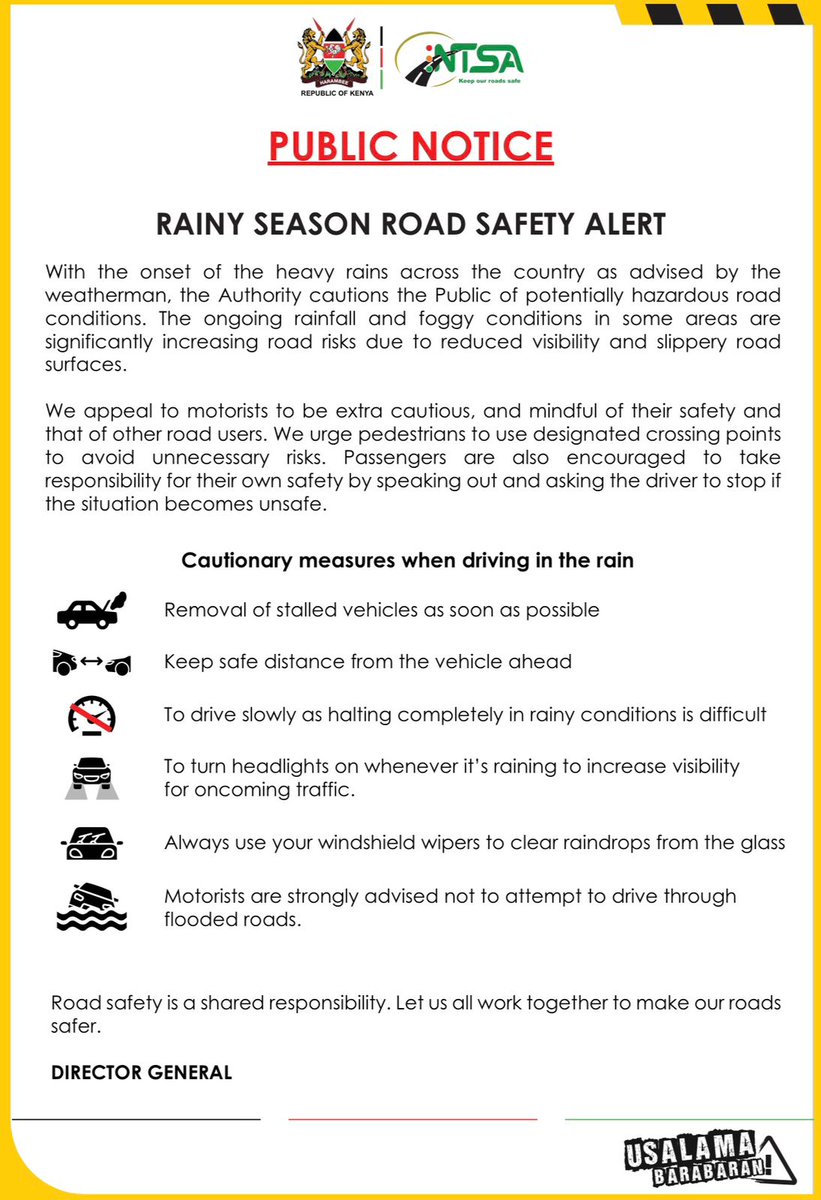
“We urge pedestrians to use designated crossing paths to avoid unnecessary risks. Passengers are also encouraged to take responsibility for their own safety by speaking out and asking the driver to stop if the situation becomes unsafe,” NTSA said in a statement.
Safety Advisory: Driving in the Rain
NTSA has outlined urgent measures for motorists:
- Remove stalled vehicles promptly to clear traffic.
- Keep a safe distance from the car ahead.
- Drive slowly, as halting completely in rainy conditions is difficult.
- Switch on headlights to improve visibility.
- Use windshield wipers consistently to clear raindrops.
- Never attempt to drive through flooded roads.
“Road safety is our responsibility. Let’s all work together to make our roads safer,” NTSA emphasized.
Emergency Response on the Ground
The Kenya Red Cross Society has confirmed that heavy rains have affected several parts of Nairobi. “Our responders are on the ground, strategically deployed and working tirelessly to assist those in distress and ensure their safety. If you spot an emergency, please report it immediately by calling 1199 so help can reach those in need as quickly as possible,” the agency urged.
Meteorological Outlook: Advisory Still Active
On March 6, 2026, the Kenya Meteorological Department reinforced the alarm with Heavy Rainfall Advisory No. 02/2026, valid until March 9 at 7 p.m.
The department warned that the peak period is ongoing, with widespread heavy showers expected across Nairobi County.
Sub‑counties including Westlands, Dagoretti, Roysambu, Kibra, Embakasi, Makadara, Kamukunji, Langata, Kasarani, and Mathare face localized downpours of 30–70+ mm. Neighboring counties are also at risk:
Kiambu: Gatundu, Thika, Juja, Ruiru, Limuru, Kikuyu, and Githunguri could see 40–80+ mm.
Kajiado: Northern areas, especially Kajiado North, face concentrated heavy showers.
Machakos: Masinga, Mavoko, Kathiani, and Machakos Town may experience 50–80+ mm.
Stay connected with us on WhatsApp and Facebook for instant updates and breaking news as it happens.