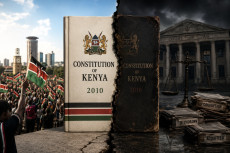
The Commission raised concerns over Article 99(3) and Article 193(3) of the Constitution, as outlined on the Kenya Law Reform Commission.
The Ethics and Anti-Corruption Commission (EACC) has proposed constitutional amendments aimed at tightening integrity enforcement for candidates seeking elective office.
On March 5, 2026, EACC Chief Executive Officer (CEO) Abdi Mohamud presented the proposals before the National Assembly Constitutional Implementation Oversight Committee. The discussion focused on the implementation of Chapter Six of the Constitution of Kenya, which outlines leadership and integrity standards.

The meeting comes as Kenya prepares for the 2027 General Election.
Read More
Integrity Loopholes in Articles 99(3) and 193(3)
The Commission raised concerns over Article 99(3) and Article 193(3) of the Constitution, as outlined on the Kenya Law Reform Commission.
Article 99(3) addresses qualifications for election as a Member of Parliament (MP). It states that a person is not disqualified from running for office solely because they were convicted of abusing public office or violating integrity laws—if they have filed an appeal or review and the case is still pending.
Article 193(3) applies the same principle to Members of County Assemblies (MCAs), allowing individuals to contest or hold office while appealing convictions related to abuse of office or breaches of Chapter Six.
EACC argues that these provisions create a loophole that allows individuals convicted of integrity violations to contest elections simply by filing appeals, which may remain unresolved for years.
Proposed Amendments
The Commission recommends that such individuals remain disqualified from running for office until a court overturns their conviction or appeal decision.
According to Mr. Mohamud, some candidates exploit the current law by filing appeals that stall for extended periods, effectively bypassing integrity requirements.
Previous Reform Attempts
EACC noted that it has raised these concerns in past national forums, including the Building Bridges Initiative (BBI) and the National Dialogue Committee. However, no reforms have been implemented to date.
Clarifying the Leadership and Integrity Act
The Commission also proposed amendments to Section 13(2) of the Leadership and Integrity Act, which requires candidates to submit a self-declaration form to the Independent Electoral and Boundaries Commission (IEBC).
This form allows IEBC and EACC to assess a candidate’s integrity before clearance. EACC now seeks to clarify its role in verifying these declarations, rather than merely receiving them.
In addition, the Commission called for stronger coordination with IEBC, clear timelines for integrity verification as well as improved information sharing among institutions involved in election oversight.
Stay connected with us on WhatsApp and Facebook for instant updates and breaking news as it happens.