-1770998774.jpg)
- The session focused on strengthening media capacity in reporting on counterfeit goods, intellectual property rights, and consumer protection.
On February 13, 2026, the Anti‑counterfeit Authority (ACA), in partnership with the Media Council of Kenya (MCK), convened a training conference at Merica Hotel, Nakuru, bringing together journalists from across the region.
The session focused on strengthening media capacity in reporting on counterfeit goods, intellectual property rights, and consumer protection.
ACA leaders emphasized that counterfeit trade is not just an economic issue — it is a civic challenge. According to Yussuf Osman, the Director Enforcement ACA, Kenya loses an estimated KSh 150 billion annually to illicit trade, with counterfeit alcohol and agro‑chemicals among the most common threats.
Porous borders in areas like Mandera and Moyale make enforcement difficult, but Kenya remains ahead of many regional peers by having a dedicated authority to fight counterfeits.
The Journalist’s Role in Civic Protection
Read More
Journalists were trained on ethical approaches to covering enforcement actions, translating technical policy into public awareness, and amplifying civic education campaigns.
ACA Chief Executive Officer (CEO) Dr. Robi King'a underscored that “the media remains an ally in strengthening accountability and ensuring that interventions are clearly seen by the public.”

Reporters were urged to distinguish between counterfeit, contraband, and substandard goods, noting that only intellectual property infringements qualify as counterfeit.
Director of Enforcement ACA Yussuf Osman explained that journalists should avoid labeling seized items as counterfeit until confirmed in court, instead using terms like "suspected" or "alleged" counterfeit. This protects both public trust and legal integrity.
He reminded journalists of the importance of conducting investigations in a balanced and thorough way.
"A journalist conducting a well‑balanced investigation must begin by identifying the key players in the field. Ask: Who is the manufacturer? Who are the distributors? Who is responsible for the product’s presence in the market?" he said.

How Citizens Can Identify Counterfeit Goods
In what was labelled 4Ps, the Authority outlined practical steps for consumers and journalists to spot suspicious products:
- Price: Extremely low prices compared to market value.
- Product: Poor quality or tampered goods.
- Packaging: Broken seals, typos, wrong colors, or missing expiry dates.
- Place: Unregulated outlets or informal markets.
"Anti-counterfeit Authority is about brand protection. While Kenya Bureau of Standards (KEBS) handles quality standards, ACA focuses on intellectual property violations," Osman said.
Ethical Journalism
Speakers like Lucy Mwangi, the Research Officer at the Nakuru Media Council of Kenya reminded journalists that accuracy is non‑negotiable.
"Ethical reporting requires fact‑checking, balanced investigation, and giving accused parties the right of reply," she said.
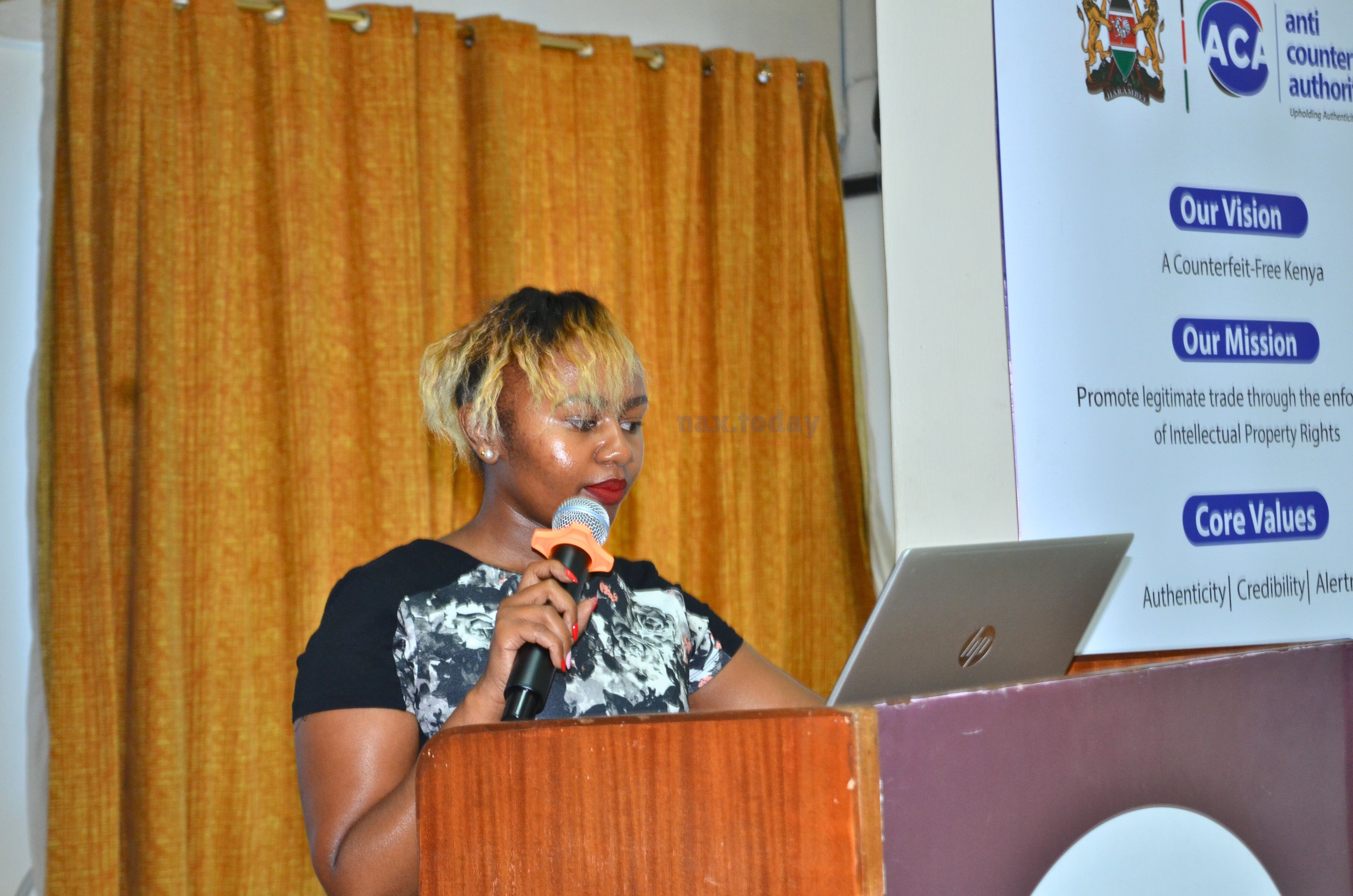
Additionally, she stressed that mislabeling or exaggerating claims can expose media houses to lawsuits and erode public trust.
ACA’s vision is clear: to ensure Kenya is counterfeit‑free. But success depends on collaboration. Journalists act as civic educators, translating complex enforcement actions into public awareness campaigns that empower consumers.
By reporting responsibly, distinguishing between illicit goods, and amplifying ACA’s work, the media helps safeguard communities and strengthen Kenya’s economic resilience.
Stay connected with us on WhatsApp and TikTok for instant updates and breaking news as it happens.