
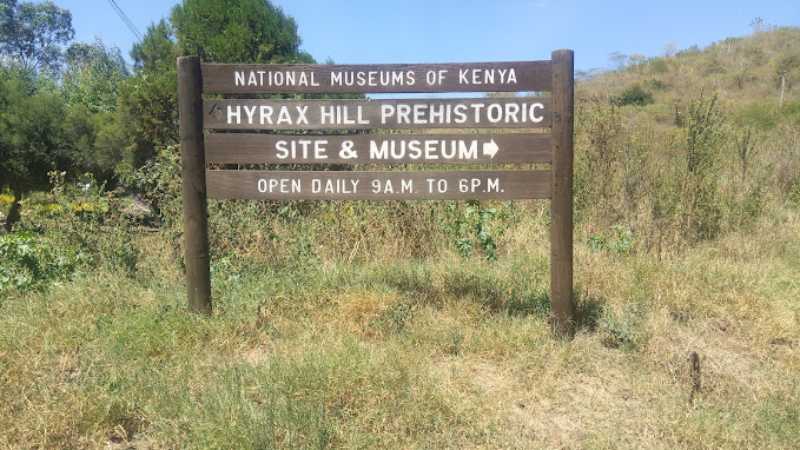
- Hyrax Hill, located just outside Nakuru City, stands as one of Kenya’s most significant prehistoric sites while remaining a living neighbor to the community. From its discovery in 1920 to its designation as a National Monument, the hill has preserved artifacts and ecological diversity that connect past and present.
This Saturday offers the perfect chance to visit Hyrax Hill in Nakuru — a place where history, nature, and local culture converge. Whether you’re drawn by the prehistoric sites, the museum, or simply the peaceful views over Lake Nakuru, weekends invite exploration and reconnection with this landmark.
Hyrax Hill carries a charm that outsiders often overlook, but Nakuru residents know it intimately. Beyond its fame as an archeological site, locals weave it into their everyday lives.
For many, “Hyrax” isn’t just a heritage destination; it’s a familiar matatu stage along the Nairobi–Nakuru highway. Saying “I’ll alight at Hyrax” is part of daily travel language.
Residents embrace Hyrax Hill as a quiet spot for evening strolls, where sweeping views of Lake Nakuru and the town offer calm after a busy day. For schoolchildren, the museum is a rite of passage. Almost every Nakuru student recalls trips with packed lunches, sketching artifacts, or listening to guides explain prehistoric tools.
Locals also use the small paths around Hyrax Hill as shortcuts between estates, especially near Section 58 or along the highway. For nearby residents, mornings begin with the distinct bird calls around the hill, a soundscape that blends seamlessly with the hum of the town.
Read More
Just four kilometers from Nakuru City, and approximately 152 kilometers northwest of Nairobi, lies one of Kenya’s most significant archeological treasures: the Hyrax Hill Prehistoric Site. Located about 400 meters off the busy Nakuru–Nairobi highway, the site offers a striking contrast between modern life and the ancient history preserved within its rocky hills.
The site derives its name from the rock hyraxes that inhabit the surrounding rocks. According to the National Museums of Kenya, Hyrax Hill covers about 59 hectares, most of which once served as settlements for early human communities. Today, it stands as a vital cultural and educational landmark in Nakuru County.
Hyrax Hill’s story began in 1920 when a colonial farmer, Mrs. Selfie, unearthed artifacts that revealed evidence of prehistoric habitation. Recognizing its importance, the site opened to the public in 1965 under the National Museums of Kenya.
It was later designated as a National Monument in April 1995 and formally confirmed in April 1996, securing its protection for future generations.
Visitors encounter a rich blend of attractions that bring history to life. Live exhibitions feature tortoises and guinea fowls, while the archeology section showcases material culture from fishing, pastoral, and farming communities of the Rift Valley. Artifacts from the Maasai, Kalenjin, Turkana, Kikuyu, and Luo communities reflect the region’s diverse heritage.
The natural history section highlights Nakuru’s ecological diversity, with specimens such as the rock hyrax, waterbuck, lesser flamingo, and spitting cobra. Beyond indoor exhibitions, visitors explore open archeological sites, a historic hill fort, and bird‑watching trails that have grown in popularity since 2018.
Hyrax Hill continues to play a vital role in education and community engagement through structured learning programs and partnerships with local stakeholders. As Nakuru expands, Hyrax Hill remains a powerful reminder that beneath the city’s progress lies a deep and enduring human story — one that connects past, present, and future.
Stay connected with us on WhatsApp and Facebook for instant updates and breaking news as it happens.



-1769698006-md.jfif)




-1769698006-sm.jfif)