

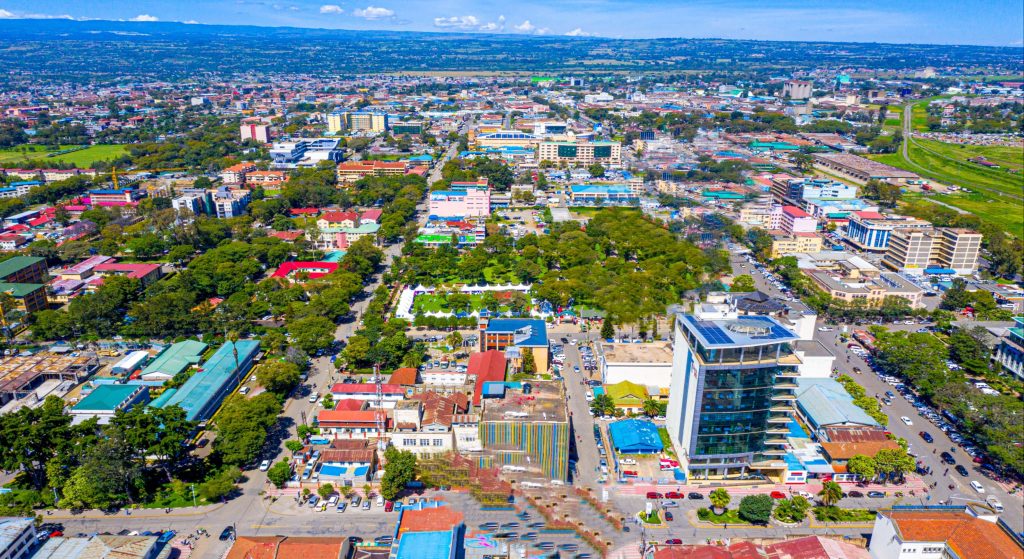
- Today, Nakuru City serves as the administrative center and stands out as one of Kenya’s most strategically located urban centers, lying at the heart of the Great Rift Valley, often referred to as the country’s breadbasket.
Nakuru County is a fully fledged city county whose demographic weight, economic strength, and political diversity will greatly influence national campaigns.
Named after Nakuru Town derived from the Maasai word “Nakurro” meaning “a dusty place”, the county has transformed from a pastoral area into a dynamic urban, agricultural, industrial, and transport hub.
Today, Nakuru City serves as the administrative center and stands out as one of Kenya’s most strategically located urban centers, lying at the heart of the Great Rift Valley, often referred to as the country’s breadbasket.
Nakuru is the third most populous county nationally, with an estimated 2.35 million residents in 2023 according to the Kenya National Bureau of Statistics (KNBS) in its 2022 Economic Survey and 2022 Statistical Abstract.
Its population has grown by 34.86 percent since the 2009 census, outpacing the national average. This growth is driven by high natural increase and steady in‑migration, as people flock to the county for jobs, education, and settlement. For political players eyeing the 2027 elections, this means a larger electorate base and greater national influence.
Read More
The county’s political economy is strengthened by its melting‑pot nature. While the Gikuyu and Kalenjin are the largest groups, Nakuru also embraces Luo, Luhya, Kisii, Kamba, Maasai, Somali, Swahili, and many others. In this way, Nakuru epitomizes Kenya’s diversity. Presidential candidates who succeed here are often those who rise above ethnic politics to address broader issues such as economic stability, inclusiveness, and good governance.
Urbanisation is another defining feature. Currently, 51.3 percent of Nakuru’s population lives in urban areas, a share that has steadily increased over the past decade. With city status, political dynamics have shifted: residents now demand solutions to urban challenges like the cost of living, housing, transport, employment, service delivery, and infrastructure. Nakuru City is emerging as an educated, youthful, and issue‑based vote bank.
According to the County Review Report (CRR) for 2025, Nakuru is young and growing demographically. According to the 2019 census, nearly 75 percent of its population is under 35.
About 650,000 individuals fall within the 18–34 age bracket, making youth a decisive force in the 2027 elections. Ignoring this demographic would be a grave political mistake. Candidates must prioritize job creation, skills development, education reform, and access to working capital.
The labour force, aged 15–64, numbers more than 1.27 million, underscoring Nakuru’s role as a major production center. Agriculture, forestry, and fishing remain vital, but transport, trade, energy, manufacturing, construction, real estate, finance, and hospitality are increasingly important. Nakuru contributes 4.9 percent to Kenya’s GDP, ranking fourth nationally, which makes it a critical player in the country’s political economy.
Campaign messages must therefore resonate with both rural and urban realities. Farmers and traders need market access and infrastructure, while urban professionals, entrepreneurs, and service workers demand solutions to inflation, competitiveness, and quality of life.
Administratively, Nakuru comprises 11 constituencies, 55 wards, and a wide network of divisions, locations, and sublocations. Effective mobilisation requires grassroots engagement community leaders, ward‑level networks, and local structures beyond elite endorsements or national rallies.
Strategically positioned in the Rift Valley and bordering eight counties, Nakuru is a political connector linking Central Kenya, the Rift Valley, and parts of Western and Southern Kenya. Its membership in the Central Region Economic Bloc (CEREB) further cements its role as a regional hub. Politically, Nakuru is where national coalitions are tested and recalibrated.
Looking ahead to 2027, Nakuru’s strong migration balance adds complexity. Migrants bring diverse loyalties, hopes, and experiences, making voting patterns less predictable. This electorate in motion favours candidates who emphasize good governance, tangible development results, and inclusive communication rather than rigid ethnic arithmetic.
Those who grasp Nakuru’s demographic realities, economic strengths, and political pluralism and align their platforms accordingly will not only stand a better chance of winning the county but also of shaping the outcome of the 2027 General Elections.
Stay connected with us on WhatsApp and Facebook for instant updates and breaking news as it happens.