
- Valentine’s won’t disappear because money bouquets are gone. But the way Kenyans express love is changing.
Valentine’s Day has never been solely about love; it has always carried layers of symbolism, expression, and, increasingly, spectacle.
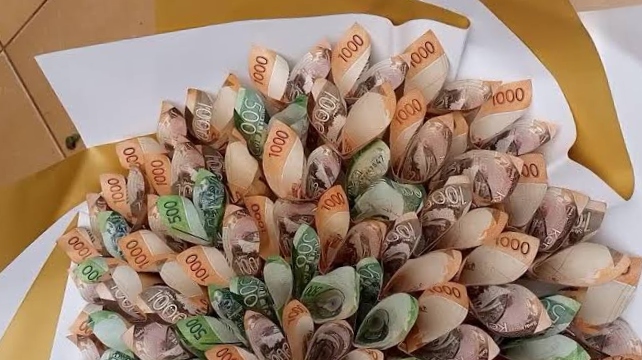
In recent years, money bouquets have bloomed across Kenya as a modern gesture of affection—blending romance, status, and social media culture into one dramatic display.
So when the Central Bank of Kenya (CBK) warned against using banknotes for decorative purposes, it did more than issue a financial regulation—it disrupted a cultural trend.
The question now goes beyond legality. It cuts deeper: will Valentine’s still feel the same when one of its most visible symbols is restricted?
Love won’t vanish because of policy. Flowers will still be bought, chocolates shared, and dates will go on.
Read More
But symbols matter. Money bouquets were never just about cash. They embodied public affection, social status, and visual storytelling in the age of Instagram and TikTok. Their rise mirrored the shift of romance from private emotion to public performance.
CBK’s stance is legally and economically sound. Currency is a national asset, not a decorative object. Damaged banknotes disrupt circulation, strain banking systems, and undermine monetary order.
From a policy lens, protecting the integrity of money isn’t optional—it’s essential for economic stability.
Yet culturally, the impact is undeniable. Valentine’s thrives on creative expression, and when one form is restricted, people naturally seek alternatives. This isn’t the suppression of love—it’s the redirection of how it’s expressed.
Economically, the ban doesn’t reduce money in circulation; it may actually improve it. Cash that would have been folded, glued, or wasted now remains usable within the financial system.
Instead of being locked in bouquets, money continues to flow through transport, food, hospitality, flowers, gifts, and experiences. In that sense, CBK’s decision may strengthen economic movement rather than weaken it.
Spending won’t stop, but its form will shift. Valentine’s Day will still be celebrated just differently.
Experiences may replace displays. Dinners may replace decorations. Travel, gifts, digital transfers, and personal moments may become the new symbols of affection. Love will adapt, as it always has.
The deeper lesson is this: culture evolves, but systems must stay stable. Romance thrives on creativity; economies thrive on structure. And when the two collide, regulation will always favor stability over symbolism.
Valentine’s won’t disappear because money bouquets are gone. But the way Kenyans express love is changing.
And maybe that’s not a loss but a transition: from performative romance to meaningful connection, from public spectacle to private intention, from displaying wealth to expressing care. Because love has never truly depended on money only on meaning.
So as Valentine’s Day approaches without money bouquets, the question lingers: how will you choose to express love this year?
Will it be through flowers, shared experiences, or perhaps a quieter gesture that carries more meaning than spectacle? Share your thoughts in the comments section below.
Stay connected with us on WhatsApp and TikTok for instant updates and breaking news as it happens.