- The United Alternative Government rose in firm opposition on Thursday, March 5, 2026, denouncing the National Infrastructure Fund (NIF) Bill as a covert campaign weapon designed to skew the 2027 General Election.
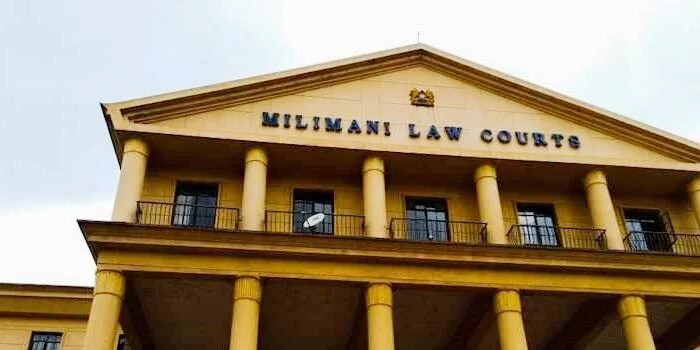
The High Court in Nairobi has removed the orders that had stopped the creation of the National Infrastructure Fund (NIF). Judge Bahati Mwamuye says the freeze no longer applied because Parliament had already passed the National Infrastructure Fund Bill the day before, on March 5, 2026.
“The court noting the developments in this matter and in light of the fact that when this court issued an ex parte conservatory order, the matter was at a juncture where no bill had been drafted or much less tabled before the National Assembly, this court lifts order number one of this court's orders and directions dated and issued on December 24, 2025 in both petitions E834 of 2025 and E835 of 2025,” Justice Mwamuye ruled.
The new law created a fresh legal framework, which the earlier petitions did not cover.
The United Alternative Government rose in firm opposition on Thursday, March 5, 2026, denouncing the National Infrastructure Fund (NIF) Bill as a covert campaign weapon designed to skew the 2027 General Election.
At a joint press conference, the opposition has accused the government of creating a parallel fiscal system that undermines constitutional safeguards and evades parliamentary oversight.
“These instruments represent a dangerous and coordinated assault on Kenya’s constitutional framework of public finance management, the long‑term integrity of strategic national assets, and already battered public trust in state stewardship,” the opposition declared.
Opposition’s Case
The leaders warned that the fund hands sweeping executive powers to Treasury Cabinet Secretary (CS) John Mbadi, who would appoint directors and set salaries without constitutional checks.
Critics also fear the fund could be fueled by the Forced sale of strategic national assets including Safaricom and the Kenya Pipeline Company—without a credible sustainability plan.
Government’s Defense
President William Ruto has positioned the NIF as a bold surgery to end marginalization, particularly in Northern Kenya, and to push the country toward first‑world status.
Majority Leader Kimani Ichung’wah echoed the defense, insisting the fund is the only way to shift Kenya from a debt‑driven model to one anchored in investments. Ruto himself declared he had “outgrown vote‑hunting” and was now focused solely on legacy projects.
The National Assembly had passed the bill only hours earlier, marking what supporters called a pivotal shift in how Kenya will finance infrastructure. The law aims to mobilize nearly KSh 5 trillion over the next decade for highways, railways, ports, energy, water, irrigation, agribusiness, and digital connectivity. Unlike previous debt‑driven models, the NIF is designed to attract both public and private investment.
Stay connected with us on WhatsApp and Facebook for instant updates and breaking news as it happens. News subscription service
-1782995946-md.png)
-1782987101-md.jpeg)
-1782973396-md.png)
-1782896996-md.jpeg)
-1782802577-md.png)
-1782995946-sm.png)
-1782987101-sm.jpeg)
-1782973396-sm.png)
-1782896996-sm.jpeg)