
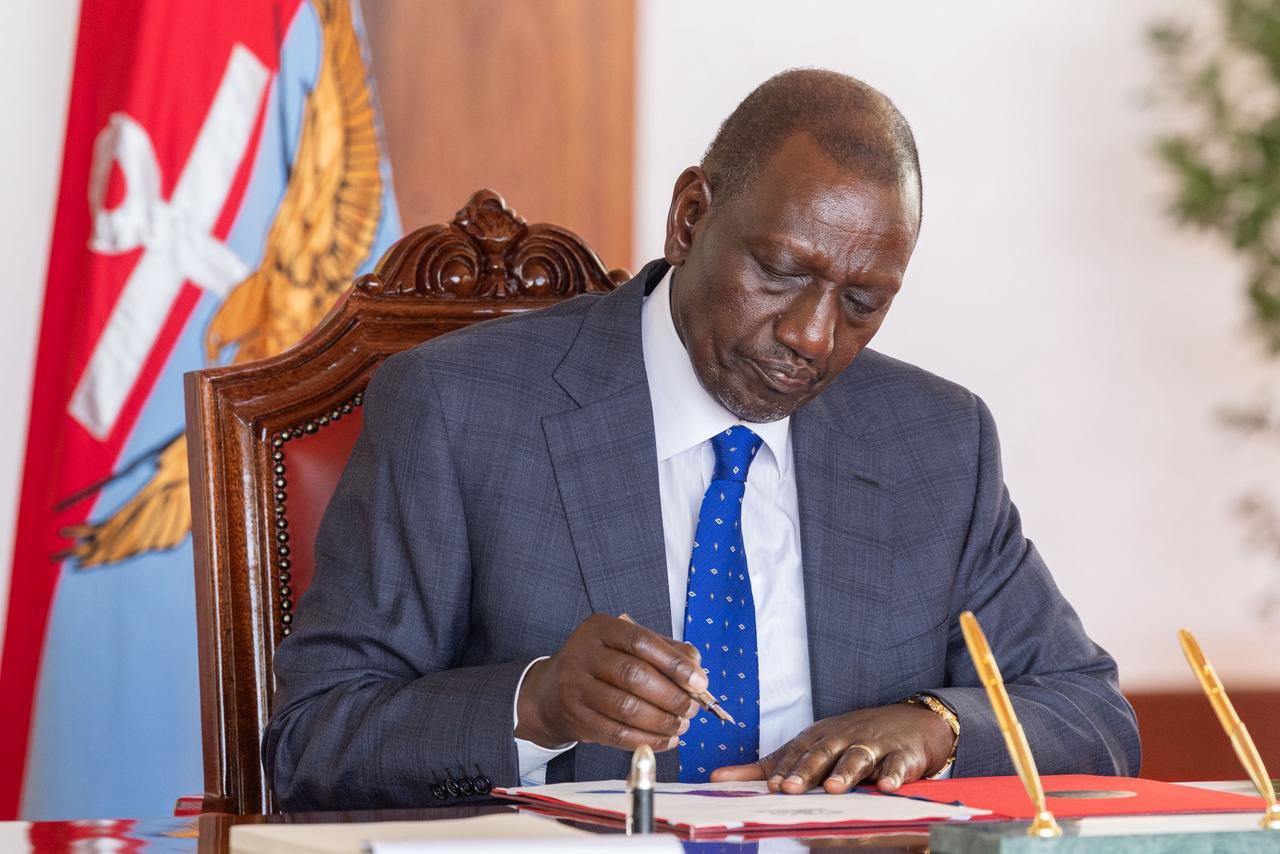
- The new law mandates at least one Births and Deaths Registration Office in every sub‑county, decentralizing a service long criticized for bureaucratic bottlenecks.
On Thursday, February 19, 2026, President William Ruto assented to the Births and Deaths Registration (Amendment) Bill, a reform sponsored by Gilgil Member of Parliament (MP) Martha Wangari.
While the signing ceremony in Nairobi carried the weight of officialdom, the true measure of the law’s impact is found in the voices of ordinary Kenyans reacting to what it means for their daily lives.
On X, Kenyans have reacted as follows:
@martinmaweu544: “Can you make it possible for the collection of the births/death certificates to be collactable at the nearest post office to save Kenyans time of moving to and from checking their status.”
@RonaldKipchum14: “That’s a good move; the services can also be improved by introducing UPI (unique personal identifier).”
@_Cashfar: “It’s good but childbirth services themselves are going the other way and becoming harder to access.”
These reactions capture both optimism and skepticism: relief that services may finally be decentralized, but also lingering doubts about implementation, privacy, and the broader state of healthcare.
The new law mandates at least one Births and Deaths Registration Office in every sub‑county, decentralizing a service long criticized for bureaucratic bottlenecks.
Interior CS Kipchumba Murkomen underscored the significance of the reform: “For far too long, access to birth and death registration services has been constrained by bureaucratic inefficiencies and limited service centres.”
By addressing these systemic barriers, the law promises timely registration, smoother access to identification documents, and improved eligibility for government services.
A Trio of Bills
The Births and Deaths Registration Act was signed alongside two other pieces of legislation: The Social Work Professionals Bill (2023), sponsored by Kaiti MP Joshua Kimilu, establishes the Institute and Board of Social Work Professionals to regulate and professionalize the sector.
Furthermore, the Pyrethrum Repeal Bill (2024), sponsored by Kikuyu MP Kimani Ichung’wah, streamlines agricultural governance by placing pyrethrum and other strategic crops under a unified framework.
For many Kenyans, the Births and Deaths Registration reform is not just about paperwork—it is about dignity, access, and recognition. A birth certificate opens doors to education, healthcare, and employment. A death certificate secures inheritance rights and closure for grieving families.
Stay connected with us on WhatsApp and Facebook for instant updates and breaking news as it happens.


-1771508867-md.jpg)





-1771508867-sm.jpg)