-1769442279.png)
- Appearing on national television on January 26, 2026, the two leaders warned that the Grade 10 transition into senior school is straining facilities nationwide and risks collapsing without clear policy, adequate resources, and stronger accountability.
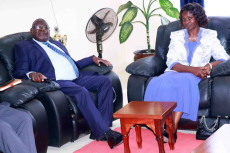
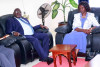
Kenya’s education sector is once again in the spotlight as Members of Parliament (MPs) Caroli Omondi (Suba South) and Geoffrey Wandeto (Tetu) call for urgent reforms to support the Competency‑Based Curriculum (CBC).
Appearing on national television on January 26, 2026, the two leaders warned that the Grade 10 transition into senior school is straining facilities nationwide and risks collapsing without clear policy, adequate resources, and stronger accountability.
Omondi stressed the importance of embedding national values into the curriculum. He proposed a new subject, Nationhood Science, to be taught from kindergarten through to university.
“We must deliberately teach patriotism, unity, and responsible leadership. Nationhood Science will ensure our children grow up understanding their duty to their country and the community,” he said, pointing to countries like Singapore and Sweden that have successfully integrated civic education into their systems.
Wandeto, on his part, highlighted the structural challenges facing CBC. “We cannot ignore the overcrowded classrooms, the shortage of teachers, and the lack of facilities. CBC is a good idea, but without resources and clear guidelines, it risks collapsing under its own weight,” he cautioned.
Read More
Kenya’s CBC took its biggest step in January 2026, when the first cohort of learners moved from Grade 9 (Junior Secondary) into Grade 10 (Senior School). The transition introduced structured career pathways, new placement criteria, and expanded infrastructure needs. Current statistics show rising Grade 10 enrollment numbers, stretching senior school capacity and exposing gaps in planning.
The Government of Kenya has intensified efforts to achieve full transition, marking a decisive step in its commitment to universal access to quality education.
As of January 25, 2026, Deputy President Kithure Kindiki reported that 92 per cent of Grade 10 learners had already been admitted, with the remaining 8 per cent expected to report the following day.
Interior Cabinet Secretary Kipchumba Murkomen confirmed that his ministry is working closely with the Ministry of Education to track down learners who remain at home despite the ongoing transition.
To support this ambitious goal, the government has invested heavily in infrastructure, constructing 23,000 classrooms and 1,600 laboratories nationwide, alongside recruiting and deploying 100,000 teachers.
Education Cabinet Secretary Julius Ogamba emphasized that no child should be denied admission to a public senior school, reminding principals to use capitation funds prudently and allow parents flexibility in meeting household contributions.
In accordance with the Basic Education Act 2013, no learner is required to pay admission fees, and it is punishable by law for parents or guardians to fail to present their children for admission. Subcounty Directors of Education have been tasked with collecting data on all learners admitted, whether they arrive in junior school uniforms or without fees, and submitting this information to the Ministry headquarters.
Stay connected with us on WhatsApp and Facebook for instant updates and breaking news as it happens.