

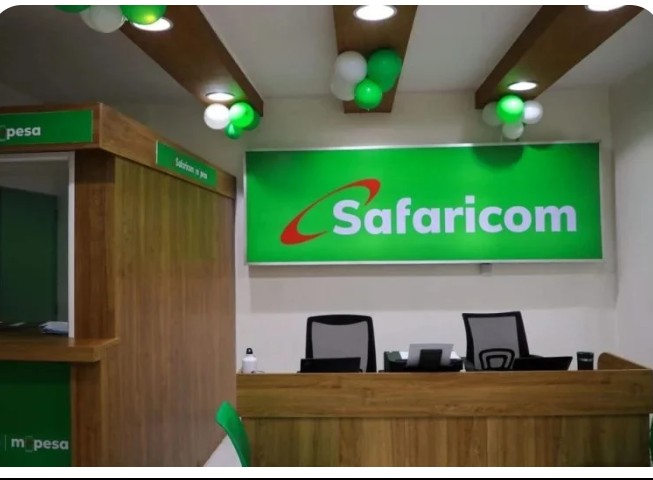
Safaricom has previously warned customers about fake cash-prize promotions and messages that direct users to suspicious links to claim supposed rewards. The company has advised customers to rely on its official channels when checking whether a promotion is legitimate.
Safaricom cautions Kenyans over fake Ksh3,000 giveaway circulating online.
Safaricom PLC CEO Peter Ndegwa speaks during a past event. Safaricom on Wednesday, November 18th 2026, cautioned Kenyans against a circulating post claiming the telecommunications company is offering customers Ksh3,000 to celebrate the Lamu Cultural Festival, describing the posted fake promotion as a fraudulent scheme.
The warning followed a public query by X user Yussuf mahat Abdi, who uses the handle @BarreMahat.Abdi tagged Safaricom’s verified account and asked the company to confirm whether the cash offer was legitimate.
“Hello @SafaricomPLC, are you aware of this circulating post claiming Safaricom is offering Ksh 3,000 to customers in celebration of the Lamu Cultural Festival? Could you confirm whether this promotion is legitimate?” Abdi asked.
Responding on Wednesday, November 18, Safaricom said the offer appeared to be fraudulent and urged customers not to disclose personal information or carry out any instructions linked to the post.
“Hello BarreMahat, thank you for reaching out. This appears to be a fraudulent scheme. Please do not share your personal information or perform any task that might be requested of you,” the company replied.
The company did not identify the source of the message or explain what tasks users were being asked to complete.
Customers should treat the offer as unverified and avoid submitting personal details or following requests attached to it.
HOW TO AVOID FAKE SAFARICOM PROMOTIONS.
Customers should verify promotional messages through Safaricom’s official communication channels before acting on them. A post using the company’s name, logo or branding does not, on its own, establish that an offer is genuine.
Safaricom has previously warned customers about fake cash-prize promotions and messages that direct users to suspicious links to claim supposed rewards. The company has advised customers to rely on its official channels when checking whether a promotion is legitimate.
Customers should also be cautious of requests for confidential information, account details, passwords, M-PESA PINs or one-time verification codes as Safaricom would not do it. Such information should not be shared with people or websites claiming to help them claim a prize.
Abdi’s query linked the alleged giveaway to the Lamu Cultural Festival, but Safaricom did not verify that connection. His post did not include a link to the offer or describe the steps customers were asked to take. Kenyans who see the Ksh3,000 message are urged to avoid sharing it as confirmed information and to verify any related claims directly with Safaricom before taking action.


-1774423691-md.jpg)




-1774423691-sm.jpg)