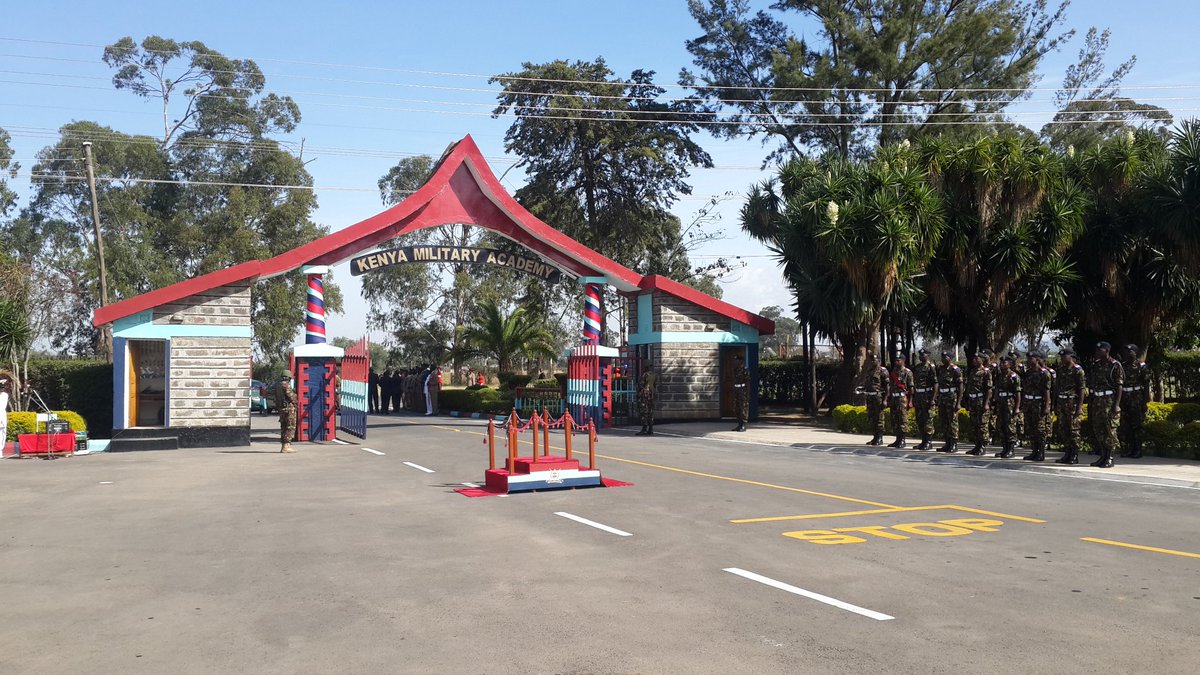
- For many, the barracks are not just a reminder of colonial control but also a source of pride, representing Kenya’s sovereignty and sacrifice.
Ask anyone in Nakuru about Lanet, and they’ll tell you it’s the “military corner” of the county. Yet walk its streets today and you’ll see more than soldiers in uniform—you’ll find schoolchildren rushing to class, traders selling fresh produce, and families building homes along the Nakuru–Nairobi highway.
Lanet has become a place where military discipline and civilian life overlap. The Kenya Military Academy and the National Defence University Kenya anchor its identity, but Lanet Secondary School and the newly commissioned 150 bed hospital show how the community has grown into a mixed hub of service, education, and healthcare.
Still, beneath this modern rhythm lies a history that stretches back to Kenya’s colonial era.
Lanet was established as a British military base, part of the King’s African Rifles (KAR) network that enforced imperial control across East Africa. Its strategic location along the Nakuru–Nairobi highway made it a key site for monitoring movement in the Rift Valley.
As independence approached, Lanet became a symbol of both repression and resilience. Local oral accounts suggest nationalist leaders were monitored from Lanet
Read More
After independence in December 1963, the KAR units were reorganized into the Kenya Rifles, headquartered at Lanet Barracks. Just weeks later, in January 1964, soldiers of the 11th Kenya Rifles staged a mutiny.
They demanded better pay and the removal of British officers, breaking into the armory and insisting on meeting Prime Minister Kenyatta. Though they did not attempt a coup, British forces were called in to disarm them. The incident underscored the fragile stability of Kenya’s young republic and remains one of the country’s earliest post independence crises.
Despite its turbulent past, Lanet remained a cornerstone of Kenya’s defense infrastructure. The barracks continued to train cadets, and later became home to the National Defence University Kenya.
But Lanet also grew into a civilian settlement. Families of soldiers lived alongside farmers and traders, creating a unique community where bugles at dawn blended with the rhythms of market life. Schools like Lanet Secondary School emerged from land allocations by the Kenya Defence Forces, bridging military infrastructure with public education.
In 2025, President William Ruto commissioned a regional hospital at Lanet Barracks under the Ulinzi Prime Health Services Fund, serving both military personnel and civilians. For residents, this was more than a healthcare milestone—it was proof that Lanet’s legacy could serve the nation while uplifting local lives.
Today, Lanet is remembered not only for its colonial garrison and the mutiny of 1964, but also for its resilience and transformation. It stands as a living testament to Kenya’s journey: from colonial subjugation to independence, and now to modern development.
For Nakuru, Lanet is more than the “military corner.” It is a place where history guards the nation, and where everyday life continues to write new chapters of hope and belonging.
We’ve traced Lanet’s journey—but the real story lives in its people. Nakuru residents, what’s your Lanet memory? Share your thoughts in the comments section below.
Stay connected with us on WhatsApp and TikTok for instant updates and breaking news as it happens.