
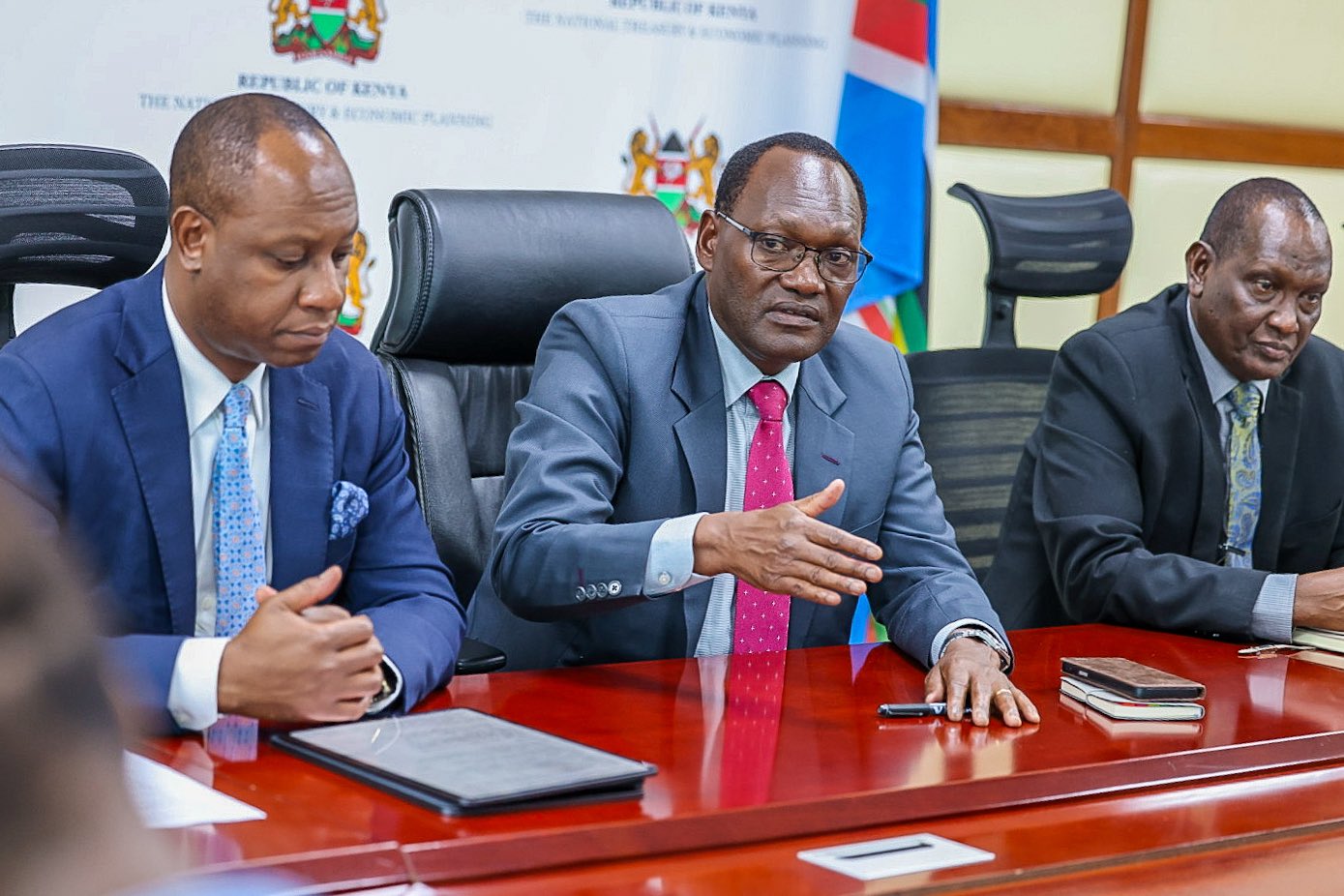
On March 23, 2026, Kiptoo chaired a high‑level consultative meeting at the Treasury with PS Mohammed Liban (Petroleum), PS Jonathan Mueke (Livestock), PS Boniface Makokha (Planning), and technical teams. Their mission: assess emerging risks and craft coordinated responses.
The war in the Middle East has become more than a regional crisis. It is now a global economic shock, with Kenya feeling the strain in fuel, food, and farm inputs.
The Principal Secretary (PS) for the National Treasury, Chris Kiptoo, warns that the conflict poses significant risks to both global and domestic economies. He cites potential disruptions to supply chains and logistics, rising energy and fertilizer costs, heightened price volatility, exchange rate fluctuations, and reduced remittance inflows.
On March 23, 2026, Kiptoo chaired a high‑level consultative meeting at the Treasury with PS Mohammed Liban (Petroleum), PS Jonathan Mueke (Livestock), PS Boniface Makokha (Planning), and technical teams. Their mission: assess emerging risks and craft coordinated responses.
“We are taking a proactive and coordinated approach, including the establishment of a standing mechanism to continuously monitor developments and guide timely policy responses,” Kiptoo said.
Agriculture Under Pressure
Read More
Through a post on X, PS Jonathan Mueke stressed that the Middle East is a key export market for Kenya’s livestock products, especially meat. The war is disrupting trade, raising costs, and putting pressure on the sector.
“As Government, we are taking coordinated action to stabilize the situation, protect livelihoods, and strengthen resilience,” Mueke said.
On March 12, 2026, the Cabinet Secretary (CS) for Agriculture and Livestock Development, Mutahi Kagwe, added that Kenya is seeking alternative markets for meat and goats previously exported to Iran.
“We have been sending about 300 million shillings per week to the Middle East in terms of meat, goats, and related products. This is going to be impacted,” Kagwe said.
He noted that tea exports are less exposed, with most shipments routed through the Red Sea to Egypt, Kenya’s largest consumer. He praised young entrepreneurs for packaging tea locally, ensuring exports leave the country branded.
“The most important aspect in the whole farming chain is the farmer,” Kagwe emphasized.
Fuel Prices and Tax Debate
On March 9, 2026, Kiharu Member of Parliament (MP) Ndindi Nyoro insisted that pump prices must reflect the actual cost of fuel already imported, not speculative forecasts.
“The price that Kenyans pay at the pump should be guided by the real cost of fuel already in the country,” he said.
Nyoro criticized the 16 percent VAT and other levies on petroleum products, arguing they inflate costs unfairly. He urged government to remove the taxes, noting that when global oil prices fell, reductions at the pump were minimal because tax hikes offset the relief.
His remarks resonate as households struggle with inflation. Fuel costs ripple through the economy, raising transport fares, food distribution costs, and commodity prices.
Energy Assurances
Energy and Petroleum CS Opiyo Wandayi sought to calm nerves, assuring Kenyans that the country holds sufficient petroleum stocks through April 2026. Imports secured under the Government‑to‑Government deal with Saudi Aramco, ADNOC, and ENOC guarantee continuity of supply.
Yet analysts warn that while Kenya’s physical supply remains stable, the financial pressure is mounting. Brent crude has surged nd freight and insurance costs for supertankers are climbing. Nearly all of Kenya’s oil imports transit the Strait of Hormuz, now a flashpoint in the war.
The Global Conflict
The Israel–Iran war, now in its 25th day, is an intense military confrontation involving Israel and the United States on one side, and Iran and its allies on the other.
On February 28, 2026, Israel and the U.S. launched airstrikes on Iranian nuclear facilities and military infrastructure. Over 1,500 people have been killed in Iran, including civilians and senior officials.
Iran has responded with massive missile and drone barrages, striking Israeli towns and U.S. bases in the Gulf. Hezbollah has intensified rocket attacks from Lebanon.
Strait of Hormuz: Iran has effectively closed this vital oil corridor, threatening global supply. U.S. President Donald Trump has warned of severe retaliation if it is not reopened.
While Washington claims “productive conversations” are underway, Tehran has dismissed the claims as “fake news.”
Stay connected with us on WhatsApp and Facebook for instant updates and breaking news as it happens


-1774277619-md.png)





-1774277619-sm.png)