
- Weddings, birthdays, graduations, and harambees are now seeing a shift toward digital transfers, with platforms like M‑Pesa, Airtel Money, and bank transfers offering instant, dignified ways to contribute. QR codes printed on programs or displayed on screens have made cashless giving seamless, allowing guests to send gifts without handling physical currency.
The Central Bank of Kenya’s (CBK) directive discouraging the use of bank notes for gifting has stirred debate, but it is also reshaping how Kenyans express generosity.
According to a press release issued on February 2, 2026, the CBK maintained that spraying, pinning, folding, or publicly displaying bank notes during events amounts to defacing currency—an offence under the law. The bank argues that such practices damage money, shorten its lifespan, and increase the cost of replacing worn‑out notes.
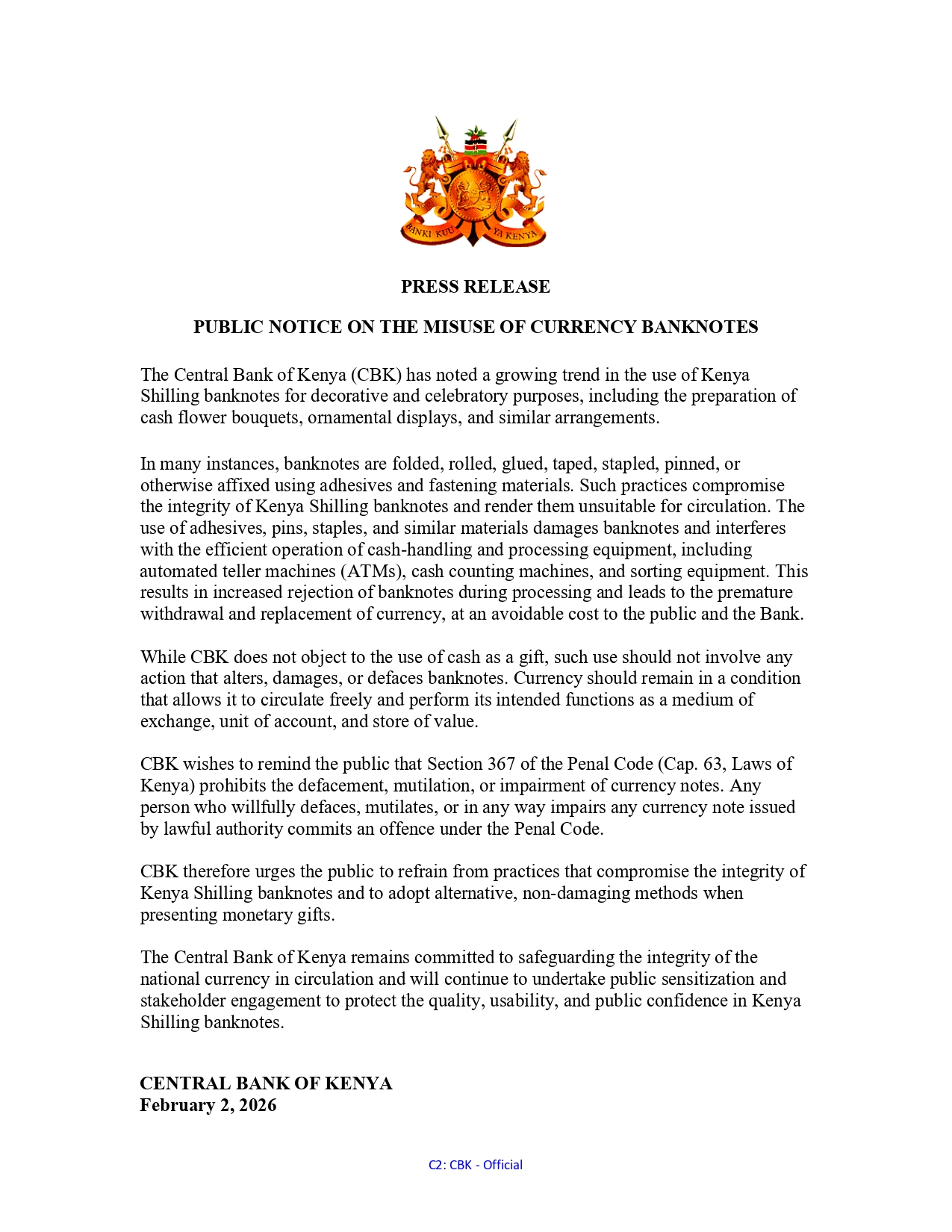
By outlawing practices such as spraying, pinning, or folding notes at public events, CBK has pushed society to explore more creative and lawful alternatives.
Read More
Alternative Gifting Pathways Emerging
1. Digital Transfers:
Weddings, birthdays, graduations, and harambees are now seeing a shift toward digital transfers, with platforms like M‑Pesa, Airtel Money, and bank transfers offering instant, dignified ways to contribute. QR codes printed on programs or displayed on screens have made cashless giving seamless, allowing guests to send gifts without handling physical currency.
2. Non‑Cash Tokens of Care:
Beyond digital options, thoughtful non‑cash gifts are gaining popularity. Shopping vouchers, household items, business tools, and school fees contributions are being embraced as practical tokens of care.
In rural and cultural contexts, livestock pledges continue to symbolize generosity while aligning with tradition.
3. Event Innovations:
Event planners have also stepped in with inventive solutions—decorative envelopes, symbolic cheques, and gift boxes—ensuring that contributions are acknowledged without breaching the law. Some hosts now dedicate moments in their programs to publicly appreciate digital givers, preserving the celebratory spirit without displaying money.
Cultural commentators argue that this shift could ease the pressure of flashy cash displays and redirect focus toward more meaningful, lasting gifts that support education, livelihoods, and family well‑being.
CBK has encouraged the public to embrace these lawful and modern methods, noting that creativity and technology can preserve both tradition and the dignity of Kenya’s currency. The message is clear: generosity does not have to come wrapped in bank notes. With imagination, celebrations can remain vibrant, respectful, and fully compliant with the law.
Stay connected with us on WhatsApp and TikTok for instant updates and breaking news as it happens.