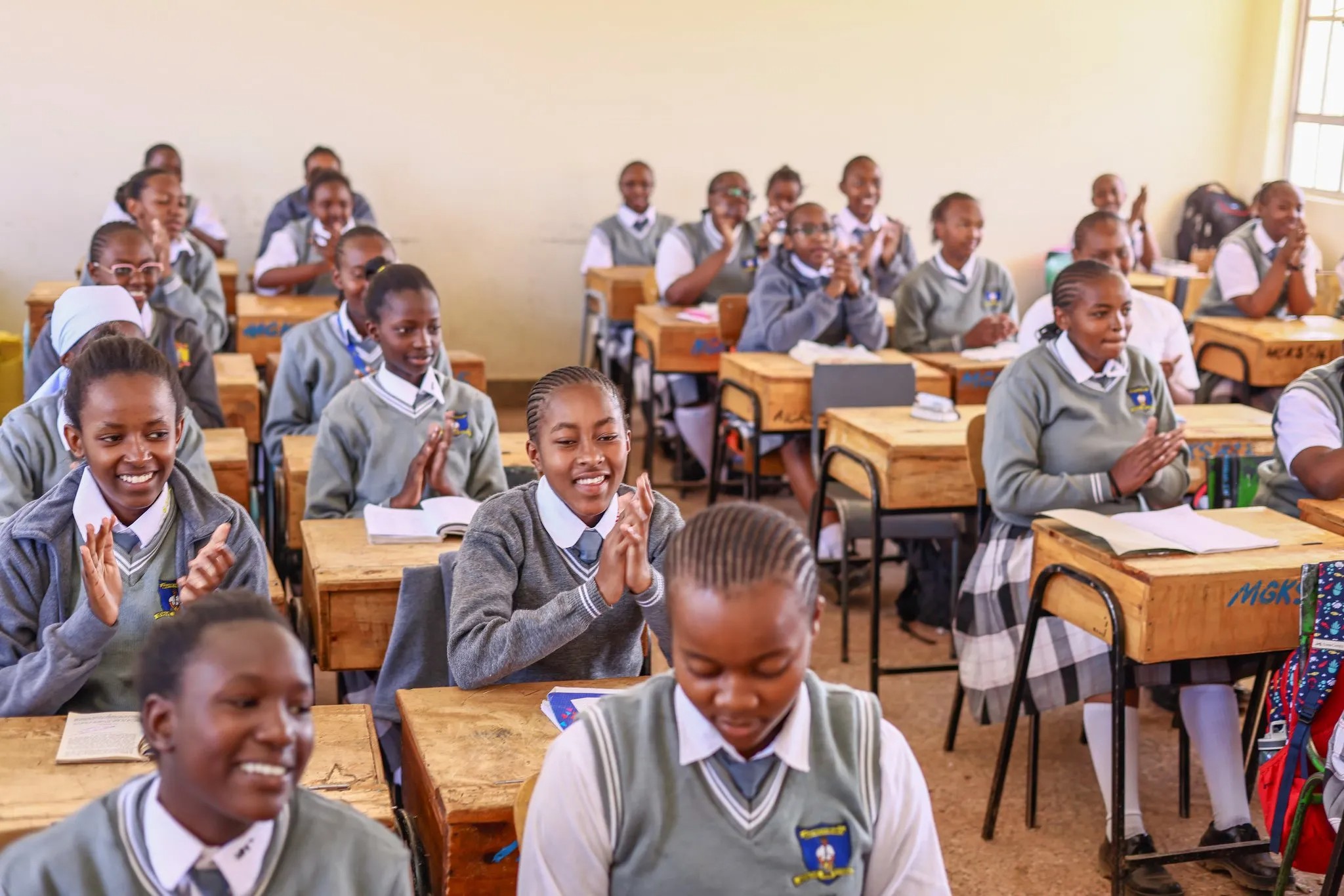
- According to a statement released on January 18, 2026 by the Ministry of Interior and National Administration, the 2025-2026 transition marks a major national milestone, reflecting strong collaboration between the government, parents, schools and communities to achieve the target of 100% school transition.
Kenya has recorded significant progress in rolling out the Competency-Based Curriculum (CBC), with the Ministry of Interior and National Administration announcing a 97 percent transition rate from Grade 6 to Junior Secondary School (JSS) in 2025–2026.
The achievement signals nationwide momentum under the new Competency-Based Education framework. Transition to Senior Secondary School is also gathering pace, with 61 percent of eligible learners already enrolled as placement and admission continue across the country.
In a statement released on January 18, 2026, the Ministry described the transition as a major national milestone, reflecting strong collaboration between government, parents, schools, and communities in pursuit of the 100 percent transition target.
A report compiled by National Government Administrative Officers (NGAOs) in partnership with County Directors of Education confirmed that learner access, retention, and progression remain on a positive trajectory.
“We reaffirm the government’s commitment to full transition as a national imperative. Every child has a human and constitutional right to education, and we must all work together to prevent dropouts driven by cost barriers, delayed placement, or social vulnerabilities,” the Ministry stated.
Read More
Special interventions continue in arid and semi‑arid regions, informal settlements, and border areas, where poverty, insecurity, and long distances to school remain obstacles. Authorities have intensified coordination with security agencies to guarantee safe learning environments, particularly in regions previously affected by instability.
The Ministry has relied on NGAOs including chiefs, assistant chiefs, and sub‑county administrators to map out‑of‑school learners, verify enrolment data, and engage households at the grassroots level. Learner tracking has been strengthened through the National Education Management Information System (NEMIS), which identifies gaps in registration, migration, and documentation such as birth certificates.
Education officials emphasized that the high transition rate demonstrates sustained government commitment to ensuring no learner is left behind during one of Kenya’s most ambitious education reforms. Targeted support has also been extended to learners with special needs through referrals, community follow‑ups, and collaboration with social protection programs.
Authorities pledged to continue strengthening community sensitisation, enhance data‑driven planning, and maintain a whole‑of‑society approach to ensure every learner is enrolled, retained, and supported throughout their education journey.
Interior Cabinet Secretary Kipchumba Murkomen has also acknowledged that the government inherited the CBC system without a proper transition plan from the previous administration. Despite early challenges, he noted that progress has been made, with about 70 percent of Grade 10 students already transitioned, and assured that the government is working toward achieving full transition.
Stay connected with us on WhatsApp and Facebook for instant updates and breaking news as it happens.