
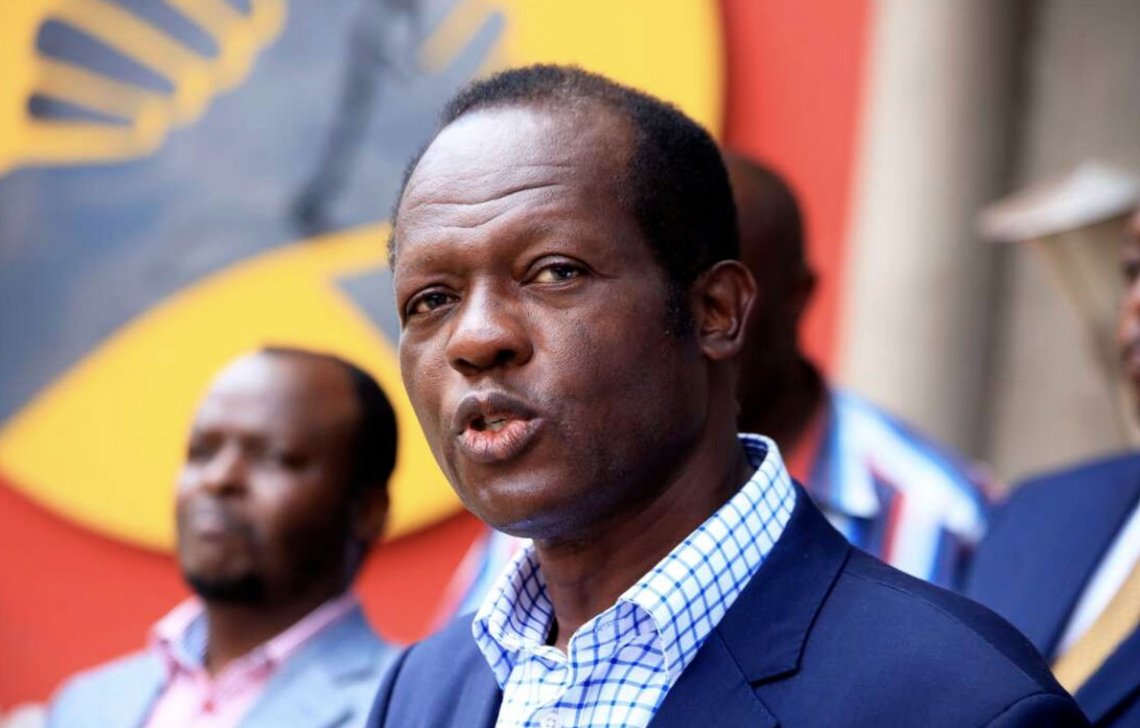
- If a former minister can be detained in such circumstances, what hope remains for ordinary citizens? Kenya must confront these contradictions, because the rule of law cannot survive when the police station itself becomes a place of fear.
In Kenya today, even the police station no longer feels like a sanctuary. The ordeal of Raphael Tuju, former Cabinet Secretary, is not just about one man’s suffering—it is a mirror reflecting the fragility of the rule of law.
When a former minister can walk into a station seeking protection and instead emerge injured, the message to ordinary citizens is chilling: the very institutions meant to safeguard justice risk becoming sites of fear.
Tuju disappeared on Saturday evening, March 21, 2026 together with his driver, Steve Mwanga. His car was later found abandoned on Miotoni Lane in Karen, hazard lights still blinking. His phone was off. His family reported him missing. For two days, the country feared the worst.
On Monday, March 23, Tuju resurfaced. At a press conference, he explained that he had been hiding after noticing he was being trailed by an unmarked Toyota Land Cruiser without plates.
He said he escaped by turning into a narrow road and sought shelter with a family at the Nairobi–Kiambu boundary. He admitted he did not go to the police—because he no longer trusted them.
Read More
Later that day, Tuju walked into Karen Police Station to record a statement. He was accompanied by opposition leaders Kalonzo Musyoka, Eugene Wamalwa, and former Attorney General Justin Muturi.
Instead of protection, he was arrested. Lawyers present, including Ndegwa Njiru and PLO Lumumba, said officers forced him into a Subaru without recording the arrest in the Occurrence Book—the official log of police custody.
Witnesses described confusion. At one point, Tuju cried out, “You are breaking my back,” as officers allegedly used force against him. His lawyers later confirmed his pre‑existing injury was worsened and doctors had to be called.
The Directorate of Criminal Investigations (DCI) later issued a statement, insisting Tuju’s disappearance was staged.
According to the DCI, intelligence and forensic analysis showed he was at his residence throughout the period.
The agency described the incident as a deliberate attempt to mislead the public, undermine the integrity of law enforcement, and generate sympathy for political or personal motives. The statement warned that providing false information to authorities is a serious offense and confirmed Tuju had been arrested to record a comprehensive statement.
Yet, even as the DCI framed the incident as deception, opposition leaders painted a different picture.
Former Attorney General Justin Muturi, who witnessed Tuju’s arrest, described the use of force as “deeply disturbing.”
He said through a post on X: “No Kenyan, regardless of status or position, deserves to be handled in such a manner. This is not law enforcement—it is cruelty, abuse, and a betrayal of the principles that should guide those entrusted with authority.”
Muturi warned that a nation that humiliates its citizens in broad daylight is treading a dangerous path, urging accountability without fear.
Between the official narrative of a staged disappearance and the opposition’s account of excessive force lies a troubling reality: trust in institutions is eroding.
If a former minister can be detained in such circumstances, what hope remains for ordinary citizens? Kenya must confront these contradictions, because the rule of law cannot survive when the police station itself becomes a place of fear.
Tuju is entangled in a Sh1.9 billion loan dispute over his Dari Business Park property. Earlier this month, he alleged police raided the property without a court order, arriving in vehicles without plates.
Now, the same man who feared for his life on Saturday was fighting for his safety inside a police station on Monday.
The incident has sparked debate about accountability and the role of law enforcement.
Stay connected with us on WhatsApp and Facebook for instant updates and breaking news as it happens


-1774277619-md.png)




-1774277619-sm.png)