-1772090413-1772095461.jpg)
According to the World Health Organization (WHO), zoonotic pathogens can spread through any contact with domestic, agricultural, or wild animals. Markets selling wild animal meat or by-products are especially high-risk due to the presence of undocumented pathogens.
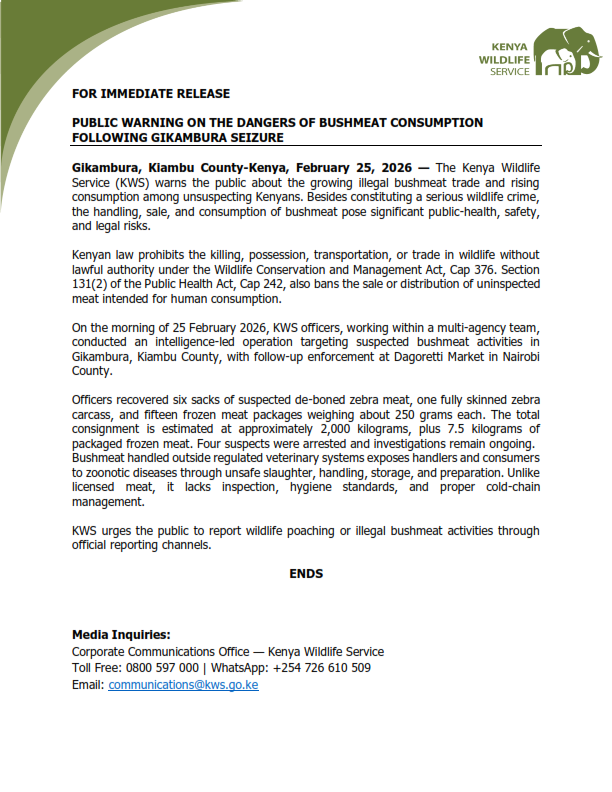
The Kenya Wildlife Service (KWS) has intercepted a major illegal delivery of zebra meat destined for local markets, exposing a dangerous intersection of wildlife crime and public health risk.
Acting on intelligence, KWS led a multi-agency operation on February 25, 2026, targeting suspected poaching activities in Gikambura, Kiambu County.
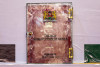
The enforcement extended to Dagoretti Market in Nairobi, where authorities recovered a staggering haul: 2,000 kilograms of de-boned zebra meat packed in six large sacks, one fully skinned zebra carcass, and 15 frozen packages of pre-packed meat ready for sale. Four suspects are currently in custody as investigations continue.
Beyond the blow to Kenya’s conservation efforts, KWS officials are sounding the alarm on a growing public health crisis.
"Bushmeat handled outside regulated veterinary systems exposes handlers and consumers to zoonotic diseases through unsafe slaughter, handling, storage, and preparation," the KWS warned in an official statement.
Read More
What are Zoonotic Diseases?
According to the World Health Organization (WHO), zoonotic pathogens can spread through any contact with domestic, agricultural, or wild animals. Markets selling wild animal meat or by-products are especially high-risk due to the presence of undocumented pathogens.
KWS reminded the public that under the Wildlife Conservation and Management Act (Cap 376), it is a serious crime to kill, possess, transport, or trade in wildlife without lawful authority. The Public Health Act (Cap 242) also strictly prohibits the sale of uninspected meat intended for human consumption.
Officials are urging Kenyans to remain vigilant and report any suspicious meat handling or suspected poaching. Public cooperation is critical to stopping these actions before the meat reaches the dinner table.
KWS urges the public to report wildlife poaching or illegal bushmeat activities through the 24/7 toll free line 0800 597 000, via WhatsApp 0726 610509 or by visiting the nearest KWS Station.
Stay connected with us on WhatsApp and Facebook for instant updates and breaking news as it happens.