

- Kenya experiences bimodal rainfall season, meaning the country typically experiences four distinct seasons based on rainfall and temperature patterns. Being on the equator, these seasons are more accurately defined by wet and dry periods.
- According to a report by the Drought Relief Emergency Fund (DREF), managed by the International Federation of Red Cross and Red Crescent Societies (IFRC), Kenya’s drought crisis deepened sharply following the failure of rains since the last quarter of 2024.
Deputy President Kithure Kindiki, on February 9, 2026, chaired a follow-up consultative meeting on drought mitigation with several Cabinet Secretaries (CSs), Principal Secretaries (PSs) and heads of agencies linked to the Environment, Climate Change and Forestry Ministry present.
This engagement zeroed in on Kenya’s worsening drought, where DP Kithure Kindiki confirmed that the government has reviewed the nation’s food and nutrition security following the poor performance of the 2025 short rains, and agreed on measures to cushion livelihoods against the escalating crisis.
The DP affirmed that the government has released additional resources to support over 3 million vulnerable Kenyans, stating, “more resources have been released to procure more food and non-food items for the 3.3 million people in need of support across the Country, for water provision, livestock feed and other related interventions.”
Kenya experiences bimodal rainfall season, meaning the country typically experiences four distinct seasons based on rainfall and temperature patterns. Being on the equator, these seasons are more accurately defined by wet and dry periods.
The short dry season (January – February/JF)
Read More
Traditionally the hottest and driest stretch of the year, 2026 has seen January and February remain largely dry and sunny across most regions.
The long rains (March – May/MAM)
Kenya’s main rainfall season is on the horizon, with the Meteorological Department forecasting near‑average to above‑average rains in Western Kenya and the Highlands, but below‑average showers along the Coast.
The long dry season (June – October)
Marked by cooler temperatures and minimal rainfall, this period is generally dry nationwide, though Western Kenya and the Coastal strip still receive significant precipitation.
The short rains (October – December/OND)
These rains are typically lighter and less reliable than the long rains. They are crucial for agricultural cycles in Eastern and Central Kenya.
According to a report by the Drought Relief Emergency Fund (DREF), managed by the International Federation of Red Cross and Red Crescent Societies (IFRC), Kenya’s drought crisis deepened sharply following the failure of rains since the last quarter of 2024.
As a result, the below‑normal October–December (OND) 2024 short rains disrupted production and erased gains from the previous three seasons, deepening household food insecurity across Kenya’s Arid and Semi‑Arid Lands (ASALs).
“Widespread crop failure and low agricultural productivity were caused by poor rainfall, worsened by crop pests, diseases, and high fuel and fertiliser costs, which seriously limited farming activities, especially among vulnerable households,” the DREF report notes.
In recent months, food insecurity in ASAL regions has intensified, compounded not only by failed rains but also by soaring food prices, resource‑related conflicts, and rising human–wildlife tensions.
The DREF assessment further found that, “by late 2025, and spilling into early 2026, Kenya’s drought worsened due to a failed short rains season, leaving millions at risk of food insecurity, water shortages, and livestock losses, especially across the ASAL counties.
The crisis extended beyond food shortages to health and economic pressures, with authorities and humanitarian agencies warning of ongoing vulnerability until the next rainy season.
Even so, the Kenya Meteorological Department offers has continued to sound the alarm, stating that drought conditions have worsened rapidly since January 2026.
The authority has projected near‑average to above‑average rains for the Lake Victoria Basin, the Rift Valley highlands, Nairobi, and parts of Northwestern Kenya during the March–May 2026 season. However, Southeastern lowlands, Northeastern areas, and the Coast are expected to see below‑average rainfall.
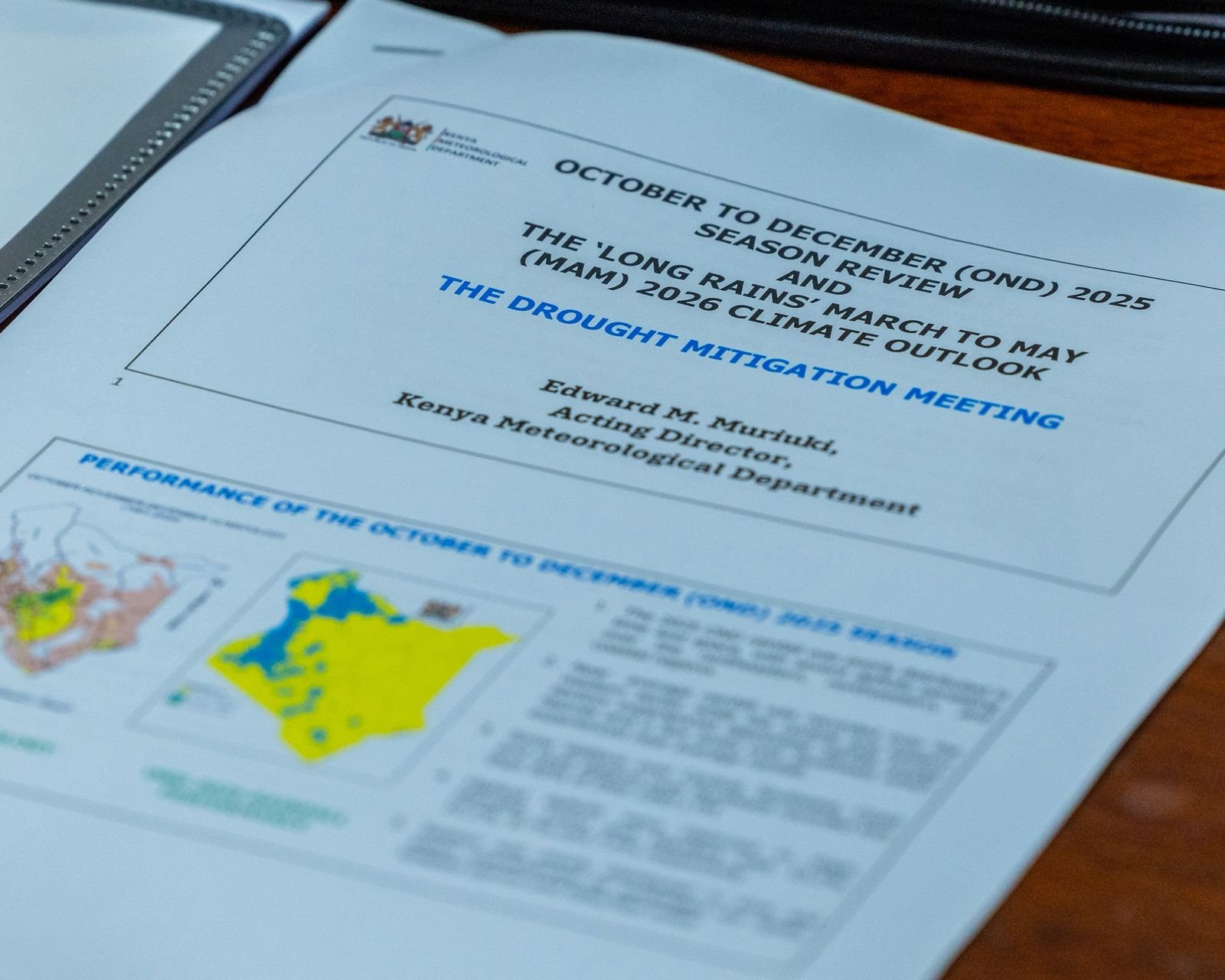
The DP's meeting underscored the urgency of Kenya’s drought response, echoing the DREF report that traced the crisis back to failed rains in late 2024.
Yet amid the strain, the Kenya Meteorological Department’s forecast for the March–May 2026 season offers a measure of hope, with expected rains in key regions signaling a possible turning point for food security and livelihoods.
Stay connected with us on WhatsApp and TikTok for instant updates and breaking news as it happens.




-1770644034-md.jpg)





-1770644034-sm.jpg)