- The township itself was proclaimed in 1904, elevated to a municipality in 1952 as part of the colonial White Highlands, and later raised to a city in 2021.
In Nakuru’s rolling landscapes, history is never far from view. Beyond the beauty of the Rift Valley lies a colonial imprint that still shapes conversations today.
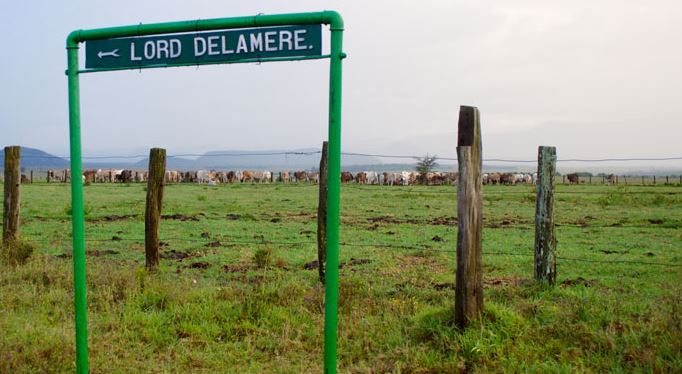
And among the names that surface most persistently, no other jogs the memory like Delamere, a reminder of how colonial lords carved their mark into the county’s identity.
By the late 2010s, the Delamere name had become synonymous with Kenya’s dairy shelves—yoghurt, fresh milk, and more flowing from its farms into households nationwide.
Yet behind this modern success lies a much older tale: the daring vision and relentless ambition of Hugh Cholmondeley, 3rd Baron Delamere, whose colonial experiments in the Rift Valley carved a legacy that still shapes Nakuru’s agricultural identity today.
Long before Nakuru’s name appeared on dairy shelves, its story was already etched in stone. Archaeological finds at Hyrax Hill, just 8 kilometres from the CBD, revealed traces of early settlement and deep human memory.
The township itself was proclaimed in 1904, elevated to a municipality in 1952 as part of the colonial White Highlands, and later raised to a city in 2021.
Its Maasai‑derived name carried forward even as British authority reshaped the Rift Valley, laying the ground for settlers like Lord Delamere, whose ambitions in land and agriculture would redefine Nakuru’s future.
However, the story of Lord Delamere and his connection to Nakuru could not have existed. In 1903, he applied for a land grant from the British Crown, but the request was denied due to queries surrounding the land’s proximity to population centres.
His second attempt was also trashed on the grounds that settlement by a white settler on the Maasai-dominated area would ignite conflicts.
Delamere’s persistence finally paid off with a 99‑year lease on 100,000 acres christened ‘Equator Ranch’.
By 1906, he had added another vast holding in Gilgil (Soysambu Ranch) stretching over 50,000 acres between Elementaita and Mbaruk, cementing his place among Kenya’s ‘largemen,’ the elite few whose landholdings defined the colonial Rift Valley.
What Delamere did with these vast lands is what etched his name into Nakuru’s memory long after his passing.
On Soysambu and beyond, he turned acres into laboratories, experimenting relentlessly until he emerged as a pioneer of East Africa’s dairy industry and a trailblazer in animal crossbreeding. He even tried wheat farming and raising ostriches for their feathers.
Nearly a century after his passing, Delamere’s name still threads through Nakuru’s land, economy, and memory. His name continues to serve as a reminder of colonial inequities and a marker of agricultural innovation.
Delamere’s imprint endures, shaping how the city tells its story today and challenging Nakuru to decide how such legacies will define its identity in the years ahead.
When you pass through Soysambu or see the Delamere brand on your shelves, what does that name mean to you?