- The government of Kenya is not only quitting to expand refugee camps but also planning to change the existing ones.
- Turning the into formal urban areas that are interlinked with the social and economic aspects of Garissa and Turkana counties.
During the official launch of the Shirika Plan in March 2025, President William Ruto emphasized Kenya’s longstanding commitment to hosting refugees despite ongoing crises in neighboring countries.
“Even as Kenya continues to open its doors to refugees, there is a need to develop resilient models to ensure they feel at home while at the same time integrating them with the host communities,” he stated.
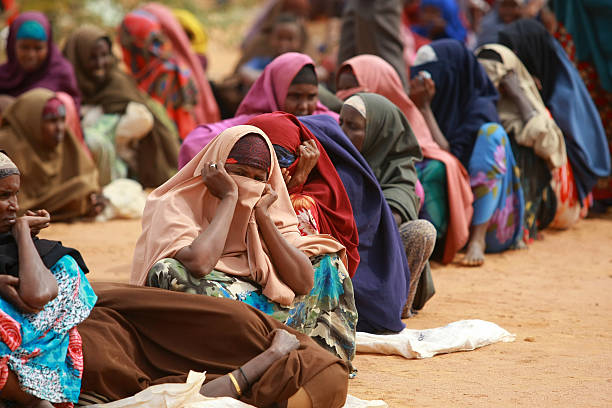
For many years, the names of Dadaab and Kakuma have carried both safety and trouble. They have been sanctuaries for those escaping wars in Somalia, South Sudan, Ethiopia, and beyond. Yet these places have also borne the weight of insecurity, dwindling humanitarian aid, environmental strain, and the frustrations of host communities.
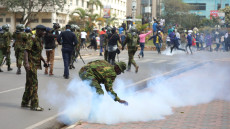
The protests that erupted earlier this year over food shortages and the forceful police responses that followed revealed just how precarious life in the camps remains.
The Shirika Plan seeks to rewrite this narrative. The government of Kenya is not only halting the expansion of refugee camps but is also reimagining the existing ones transforming them into formal urban areas integrated with the social and economic fabric of Garissa and Turkana counties.
Spanning 2024 to 2035, the program begins with legal reforms and the gradual integration of refugee services into national systems. Schools and health centers long managed by aid agencies will become part of Kenya’s public infrastructure, accessible to both refugees and locals.
Over time, county governments will assume responsibility for services once overseen by the United Nations (UN) and Non-Governmental Organisations (NGOs).
At its core, the plan is about human improvement. Through education, vocational training, and job creation, the state aims to bring refugees and host communities alike to a shared level of self-reliance, reducing aid dependence.
Drought-prone areas already struggling with water scarcity will also benefit, as environmental resilience sits at the heart of Shirika’s agenda. Sustainable agriculture and rational land use are envisioned to ease tensions born of resource competition.
Economically, Shirika imagines Dadaab and Kakuma as future business hubs, supported by long-term funding from partners such as the World Bank. With new municipalities attracting investors, markets expanding, and jobs emerging, the reliance on short-term humanitarian aid could finally fade.
Still, the path forward is far from smooth. Critics argue the plan lacks clear implementation guidelines.
Refugees lament their limited involvement in decision-making, while host communities fear intensified competition for scarce resources. Questions also linger over whether county governments can manage complex services once handled by international agencies.
Yet for those who have lived in the camps for years some for decades the Shirika Plan represents something profoundly different: the promise of a genuine town, a real livelihood, and perhaps, at last, a sense of belonging.
If Kenya succeeds, Shirika will not only transform hundreds of thousands of lives but also reshape the global conversation about responsibility toward displaced people.
Stay connected with us on WhatsApp and Instagram for instant updates and breaking news as it happens.