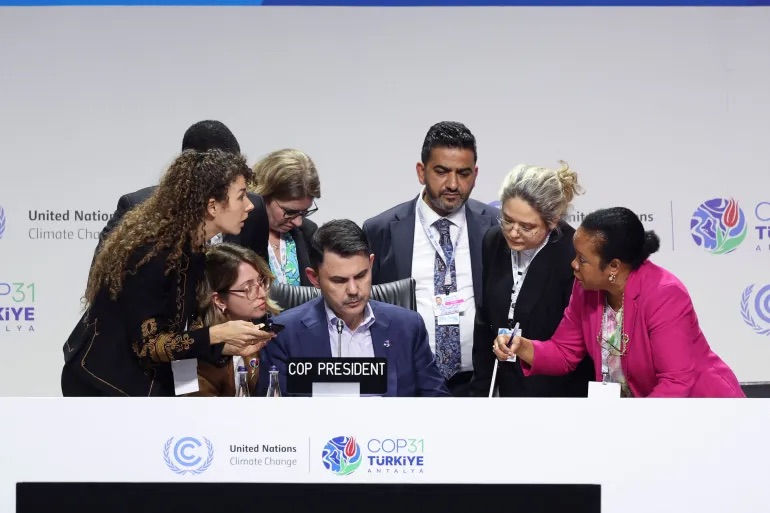
Negotiators at the COP31 climate conference in Antalya, Turkey, failed to adopt a final deal on Sunday, Nov. 22. The EU, Panama and others rejected the presidency's last draft, which did not mention fossil fuels. It is the first such breakdown since Copenhagen in 2009.
The UN climate summit in Antalya was scheduled to end on Friday, Nov. 20, but it ran well into the weekend and finished in disarray. At a chaotic closing session on Sunday, COP31 President Murat Kurum of Turkey told delegates there was no consensus and that the proposed decisions had not been adopted. The talks had gone a record 44 hours past their official end.
The final draft, produced by the co-presidents Turkey and Australia, would have acknowledged for the first time that the world is on course to overshoot the 1.5°C warming limit set in Paris, and it called for faster development of carbon-removal technology. But it left out fossil fuels, referring only to an earlier COP at which governments agreed to transition away from oil, gas and coal. Reports say an opening draft from Australia, circulated earlier in the talks, had called for a faster phase-out, and a slimmer version later removed every mention after Saudi Arabia and other major producers objected.
Ireland's climate minister, Darragh O'Brien, speaking for the EU presidency, said the bloc would not endorse a package that fails to mention fossil fuels. France's ecological transition minister called the text a step backward, and Panama also formally objected. Campaigners were split in their criticism: groups such as 350.org opposed the draft's emphasis on carbon capture, while Friends of the Earth blamed wealthy countries for broken promises and said the EU's stance was hypocritical given its own fossil fuel expansion.
The summit took place against a backdrop of high energy prices and the war in Iran, and in a year of climate-linked disasters from Europe to Nepal and Indonesia. Any deal needed consensus from nearly 200 nations