-1784288671.jpg)
Gathering at Lake Bogoria
It is noon on the shores of Lake Bogoria, one of several lakes whose waters have risen in recent years due to climate change. Inside a hall, youth, women, persons with disabilities, and the elderly from the Endorois—an indigenous community in Kenya—have gathered. This is one of the many regular meetings organized by the Endorois Indigenous Women Empowerment Network (EIWEN) to promote community empowerment.
As the discussion on the county budgeting process unfolds, a woman walks in, supported by a walking stick, adorned in traditional attire. Her entrance sparks excitement in the room. She is Christine Kandie, the founder of EIWEN—known by locals as “Director.”
Read More
The beads on her head were historically used to identify women from a distance. The shawl slung over her shoulders is a contemporary take on the hide the community members once wore. She has a disability in her right leg caused by a polio infection at an early age that was neither detected early nor properly treated because her parents preferred herbal remedies to conventional treatment.
Founded in 2016, EIWEN operates in Nakuru, Narok, Kajiado, and Samburu—areas where the minority Endorois reside. The organisation champions intersectional issues, focusing on women’s economic empowerment, gender-based violence, and women’s understanding of land rights.
A Childhood Marked by Polio
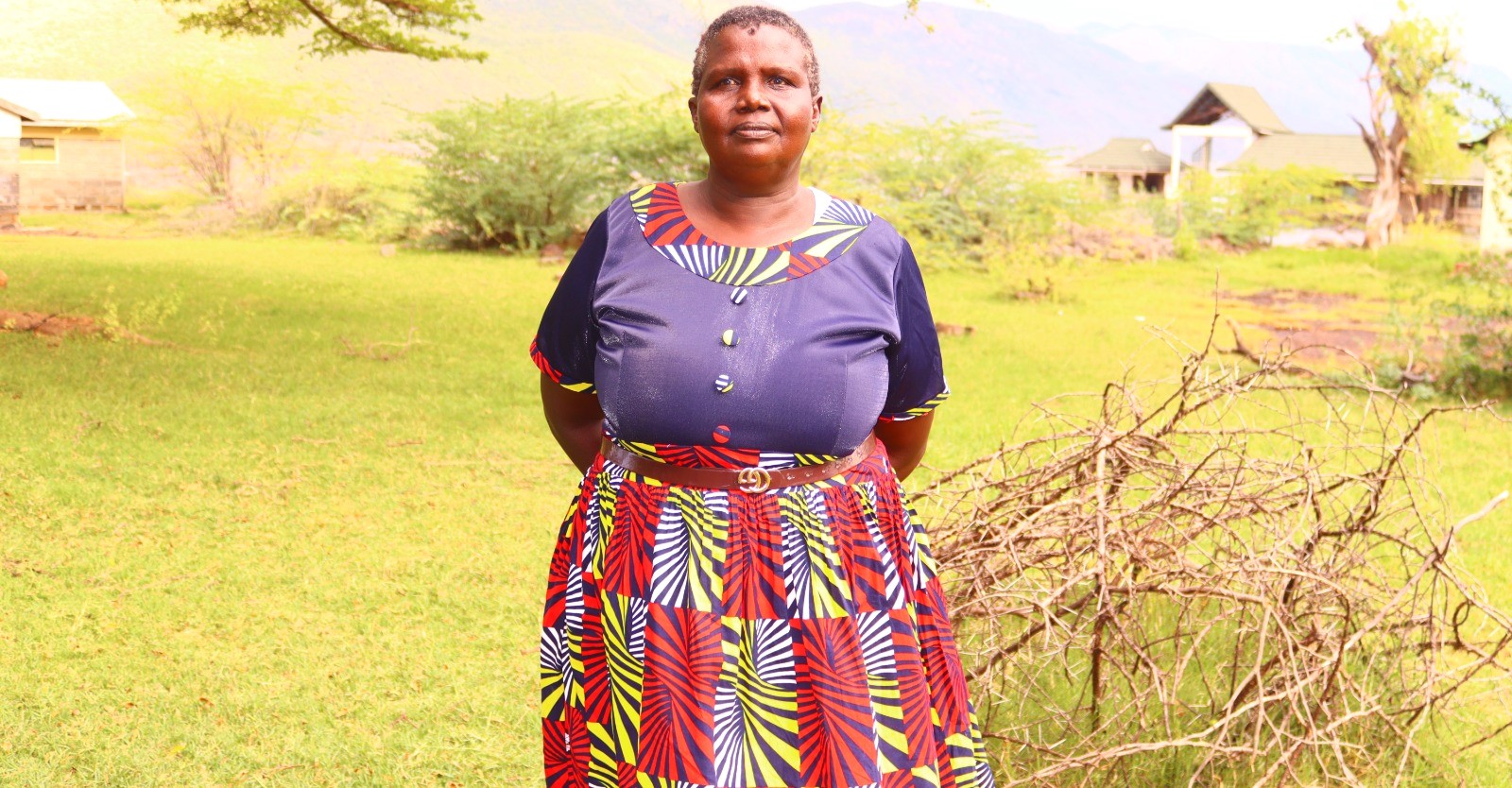
Kandie was inspired by the challenges she faced growing up as a girl from a minority community. Born and raised in Baringo County, an area classified as semi-arid in Kenya, she was not born with a disability. One morning in 1993, when she was barely nine years old, while preparing to help her parents on the farm as was the norm, she felt an extremely sharp pain in her body that prevented her from accompanying other family members.
Her parents, being from the local community and culturally grounded, opted to take her to traditional healers but none could cure the condition. Finally, they decided to take her to a nearby hospital where, despite multiple treatments, she was left with a permanent foot disability.
Struggles with Acceptance and Discrimination
“It took me ten years to accept my new condition. I really struggled with acceptance, but finally I came to terms with the situation and moved on,” she says.
Kandie has faced repeated discrimination, but she says her undying spirit and focus in life keeps her afloat. She remembers a moment early in life when she was admitted to high school and teachers were uncomfortable about letting her in because of her condition.
“They did not expect that I was disabled, so when I walked in, they were all confused on what to do. I was told to wait for a while as they went into a crisis meeting to consult what to do with me,” Kandie says with a broad smile.
Resilience, EIWEN, and Politics
Eventually, the teachers admitted her and provided transportation between the school and the highway at the beginning and end of the term. Kandie says these experiences, among others, made her resilient and prepared her for the role she plays today.
After college, Kandie worked with the Endorois Welfare Council (EWC) for eight years, where she learned to speak boldly and advocate for her community which was grappling with a myriad of challenges, including assimilation. In 2016, she quit and founded EIWEN.
Perhaps, it was with this grounding in advocacy that Kandie decided to venture into politics in the 2022 general elections. She placed fourth after a grueling battle dominated by male candidates for the position of Member of County Assembly (MCA) for Mochongoi Ward.
“Leadership has always been my passion,” she explains. “That’s why I wanted to represent my people in the political front, because politics is only seen to be for the able, leaving out people like us living with disabilities.”
For many years, the Endorois people have struggled with land disputes after their ancestral land was taken away from them in 1974 and turned into a government reserve that hosts Lake Bogoria National Reserve—with the promise of a 25 per cent revenue share. This led to a protracted court battle, which only recently concluded in the community’s favour.
Unheard Voice, Uncounted Numbers,
In 2023, Kandie wrote a book titled Unheard Voice, Uncounted Numbers, highlighting the barriers that indigenous women and persons with disabilities face in the electoral process. The book draws on her experience in politics as well as research conducted among women and persons with disabilities that included the Ogiek, Endorois, and Sengwer—all marginalized communities in Kenya.
Festus Kiptisya, 53, the area administrator of Loboi, a key area EIWEN operates in, says Kandie’s leadership has challenged the patriarchy in the community, and opened avenues to integrate both men and women to address the issues facing their community.
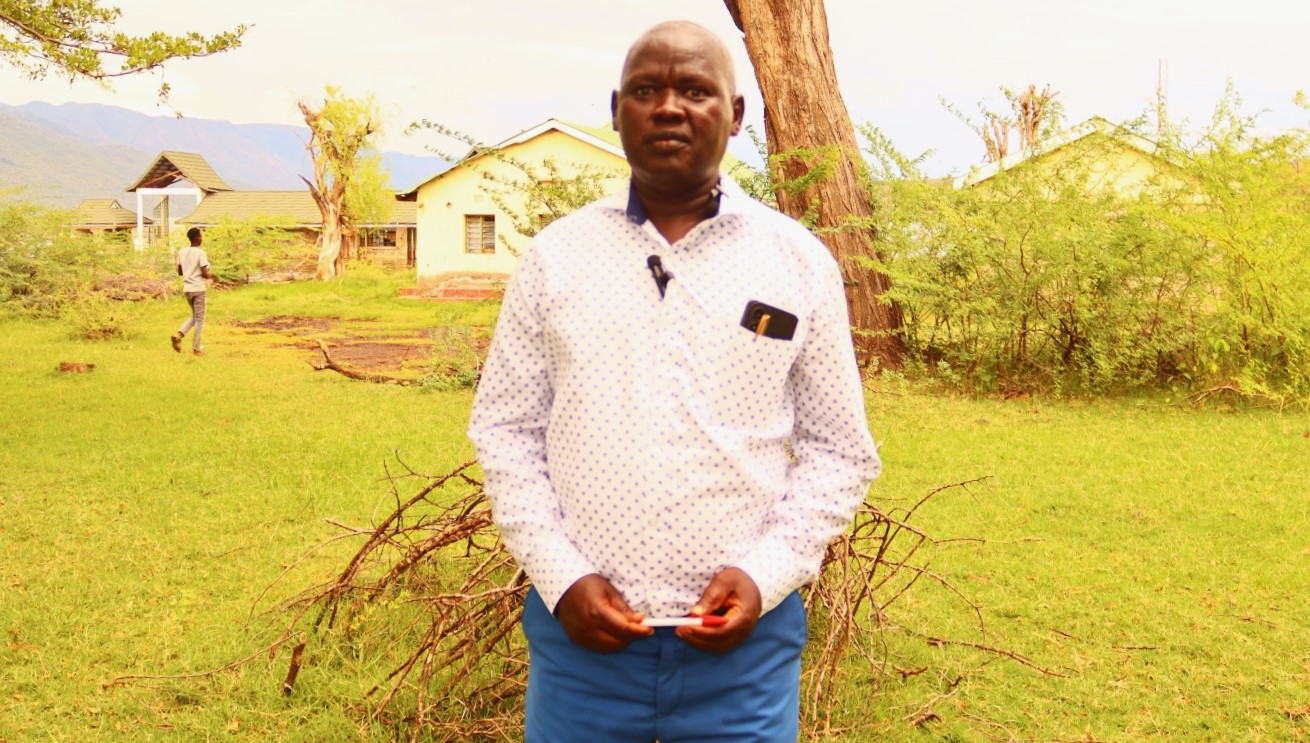
“In our culture men are the only ones to take the lead and women are not supposed to speak in front of men,” he says. “The Director has broken that in a good way. Now even in our homes we listen to our wives' views on family issues.”
He now actively encourages women administrators to speak during community development meetings, known as Barazas.
Operational Challenges Facing EIWEN
However, EIWEN faces a myriad of operational and systemic challenges that limit its influence and reach, despite its critical role in promoting the rights and well-being of the Endorois people.
The organisation faces geographic and logistical barriers in reaching underserved populations, particularly those with disabilities in remote areas lacking proper road infrastructure. EIWEN’s work is further complicated by the dispersal of the Endorois across more than six countries in the Rift Valley and Mount Kenya regions, as well as by insecurity, including banditry in parts of the North Rift.
Despite these challenges, EIWEN’s work continues. A central part of their mission is intergenerationally and how younger Endorois perceive themselves in relation to their history.
“Our effort as an organisation is steadily changing how my community views themselves. They now have confidence to self-identify in public as Endorois community members,” Kandie says.
Stay connected with us on WhatsApp and Facebook for instant updates and breaking news as it happens.